Animality, Technology & Connecting to the Natural World: A Posthuman Approach to Physical Education
Abstract
This paper explores a posthumanist approach to physical education (PE) to address declining well-being in both human and non-human worlds. It acknowledges the challenges of operating within a humanistic framework that often prioritizes human-centric goals and colonial perspectives. The proposed vision emphasizes reconnecting with our animality through self-directed and rough-and-tumble play, fostering creativity, social bonds, and a recognition of human-animal similarities. Additionally, integrating land-based education and Indigenous knowledge encourages students to view the natural world as kin, fostering respect and conservation efforts rooted in interconnectedness rather than dominance. The paper also examines the human-technology entanglement, highlighting opportunities for technology to enhance physical competence and well-being, blurring the boundaries between human and machine. By promoting autonomy, inclusion, and ecological awareness, this posthumanist PE framework challenges traditional, hierarchical, and anthropocentric educational paradigms, envisioning a more equitable and sustainable future for both human and more-than-human communities.
Introduction
A challenge of working with the concept of a posthumanist approach to education is there is no single iteration of posthumanism but instead multiple posthumanisms (Ferrando, 2017). While there can be several iterations, generally, posthumanism rejects traditional views of human exceptionalism, and instead sees all animate and inanimate beings as holding a place of prominence. Posthumanism is an intentional shift away from the ‘cybernetic triangle’ of human/animal/machine, towards a flat ontology, where all human and non-human entities are considered equal and the lines that make them distinct are blurred, or become invisible (Snaza et al., 2014). An additional challenge is given we are situated within a humanistic culture; it is difficult to practically outline a posthumanist vision of education without humanistic influence.
A humanistic education as it relates to humanistic psychology, views the end goal of teaching and learning the same as the end goal of therapy - to create a civilized and optimally functioning human being (Khatib et al, 2013). Therefore, much of the never-ending discourse around education becomes determining ‘what works’ and ‘what matters’ to achieve these aims (Snaza & Weaver, 2015). The knowledge and behaviors that are determined to matter most are often European and colonial, whereas Indigenous ways of knowing are often minimized. In addition, this human-centric approach implicitly creates a binary between what it means to be human versus what it means to be non-human. As Snaza (2014) states “schools systematically teach us that animals are so unlike us that we can do whatever we want with them without worry” (p. 45). Analogous to our approach towards the natural world.
It is important to note that the reference to humans within the hierarchical triangle of human/machine/animal does not imply that all humans in that hierarchy have traditionally been seen as equal. At various points in history, certain groups (e.g. Jews, Blacks, women, slaves) have all been dehumanized (Wilson, 2023). PE has its own equality issues as able-bodied, white, male, athletic students often thrive while students outside of this demographic are marginalized (Lynch et al., 2022). It is with these inequalities in mind, that feminist, anti-racist, social justice studies are supportive of (or at least compatible with) a posthumanist perspective for their shared desire to dismantle the current hegemonic systems (Snaza et al., 2014; De Line, 2016).
With our propensity to want to systemize education, we risk falling trap to “humanism’s greatest repetitive compulsion: the desire to plan” (Snaza & Weaver, 2015, p. 3). This paper will attempt to avoid that compulsion and hypothesize how physical education can embrace a posthumanist perspective and address the declining health of both human and non-human beings through a return to our animality, fostering a connection to nature, and thoughtful consideration of human entanglement with technology. This paper will also avoid the compulsion to express why each of these practices is beneficial exclusively to humans. As Blanco-Wells (2021) writes, the posthumanist relationship between humans and non-humans may not necessarily be symbiotic but certainly cannot be expressed as hierarchical or binary.
Return to Animality
An early pioneer of PE whose views on the subject would perhaps align with a flat ontological view is George Hebert, who first wrote his seminal work The Natural Method in 1912. Hebert articulates that activity is the law of nature, and all living beings obey the natural need for activity. In terms of physical competencies, Hebert argues that the only movements living beings need are the ones that are associated with their natural locomotion, work and self-defense. Through this distinction, there is no difference between humans and animals, we are wired to pursue activity, and the movements we perform are related to locomotion, work and defense. Despite these similarities, Hebert differentiates the two by asserting that animals develop skills through imitation, experience, and instinct, whereas humans rely on scientific principles to maximize performance (Herbet, 1912/2009). This human-animal perspective on movement selection is shared by Frank Forencich in his book Exuberant Animal in which he defines humans as brachiating bipeds, blessed with bipedalism and brachiation. Forencich questions whether PE practices such as shuttle runs (beep test), or continuous push-ups are the most effective and natural way to train the human body. After all, when was the last time you saw an ape do a push-up (Forencich, 2006). While considering more natural movement as part of a PE program to derive comparisons to animals may be of value, it is also worth exploring the how the way we engage in the world, especially as youth, is more alike to animals than students are often asked to consider.
As Snaza et al, (2014) assert “school attempts to tame our wild animal impulses early on, preparing the way for us to spend long hours in confined spaces…”(p. 45). The mental and physical well-being of young people is in continual decline (Gray, 2023; Kirk, 2021) and perhaps a contributing factor is that we have lost (or muted) our sense of a desire that is apparent in both humans and animals alike – the desire to play. Play-based learning provides an opportunity for us to once again embrace that animality. While a teacher may insist that students participating in a sport in PE are playing, the activities the teacher often selects for students to participate in (play) are frequently male-oriented, and competitive which promotes masculine ideals. The type of play this paper refers to is categorically different. To play in this context refers to an experience the individual (student) directs, free from the bounds of rules or time. Play is intrinsically motivated, creative, exploratory, and imaginative (Klein & Beach, 2023). For example, consider how a child interacts with a ball. In contemporary schooling, students learn that an orange ball, dimpled with black seams is meant to be dribbled, passed, and shot into a hoop in a specific manner while adhering to specific guidelines. Thus, the child learns to participate in basketball. On the other hand, when left to their self-directed imagination, a ball may have a variety of connotative meanings that afford various play possibilities. While the same ball can be used in formal activities where it is kicked, thrown, carried etc., it can also serve as an imaginative sun, moon, earth, or egg.
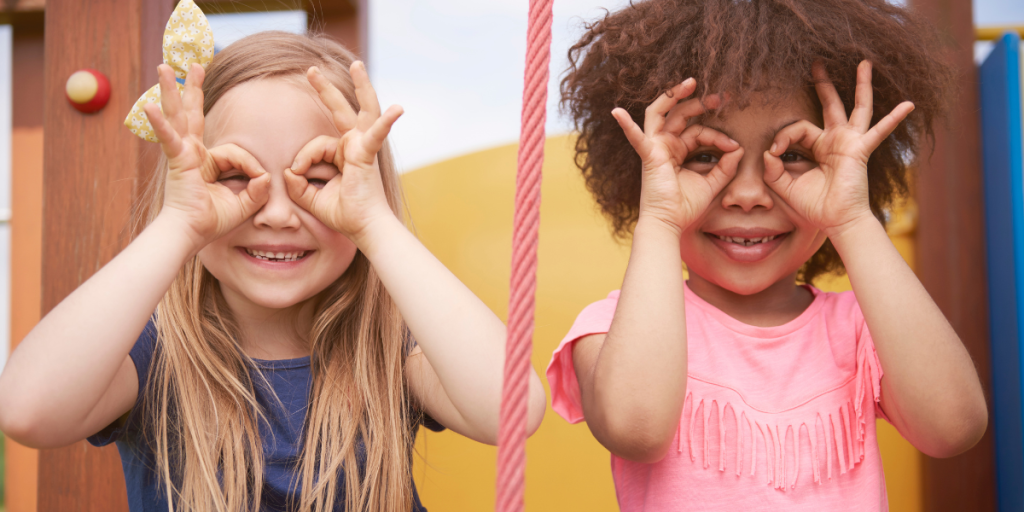
Play can also be rough, but not necessarily harmful. We may have observed a pair of dogs play fighting, seemingly biting one another yet controlling aggression so that no harm is caused. This rough-and-tumble play is in the nature of mammals and is believed to develop the social and physical skills needed for the challenges of adulthood (O’Connell, 2021). Despite the benefits of play and roughhousing, it is often seen as trivial, senseless or unnecessary - especially among adults (Brown & Vaughn, 2010). In addition, the fear of legal liability has caused some schools (such as one in Ontario) to ban all games of physical touch such as tag in PE class (Rushowy, 2015). As Gray et al, (2023) conclude, it is a lack of independent play that is a contributing cause to children's declining mental well-being. Rather than further distancing ourselves from the way that our animality has designed us to play, perhaps leaning into our animality through self-directed and rough-and-tumble play, can help students recognize that animals are not dissimilar to us. Animals play, fight, and experience happiness, love, and sadness just as humans do. They are our relatives and therefore deserving of our mutual respect (Morris, 2015). A necessary precursor to peaceful coexistence in a posthumanist world.
Connecting to the Land
In the early 1970s John Kauffman was tasked with planning the Gates of the Arctic National Park in Alaska. When considering how to develop the park, Kauffman concluded that the best thing to do would be to do nothing at all, and simply leave the place alone (Krakauer, 2019). In a similar vein, Aretoulakis (2014) is cynical about whether a mutually beneficial relationship between humans and nature is even possible, stating that “even if humans mean well in [...] securing the environment, they are still going to harm it, pollute it, misrepresent or objectify it, by merely trying to be with it” (p .174). In considering that three -quarters of Earth’s land-based environment and two-thirds of the marine environment have been significantly altered by human actions, in addition to the nearly one million species that are threatened with extinction (United Nations, 2019) there is perhaps little to say in our defense. Miller (2015) attributes the lack of connection with or reverence of the outdoor world to suburban sprawl that has led to habitat reduction as well as the lack of interest of the younger generation in the outdoors (whose attention is a source of competition). If humans are not just what we are, but who we can become through education, then perhaps through education we can also not become the iteration of this species that bears responsibility for these detrimental outcomes (Snaza et al., 2014).
Indigenous populations have long held a deep connection to the land, where the earth is viewed as equal (Sierra, 2020). Saraiya (2022) notes that in several Indigenous creation stories, the one who created the world is also the one who created humans. Mother Earth is not only a mother to plants and animals but also a mother to us all, hence both humans and non-humans are viewed as siblings. Donald (2021) would describe this as relational kinship. Donald describes how through walking, we can awaken the nêhiyaw (Cree) wisdom concept of wâhkôhtowin which refers to the “networks of human and more than human relations than enmesh us” (Donald, 2021, p. 55). The emphasis on wâhkôhtowin in nêhiyaw culture, teach us how this entanglement in human and non-human networks support us and enable us to live our lives. Many of the Indigenous games that youth play are meant to teach lessons regarding how to survive and live off of the land through necessity and not abundance. Unfortunately, when selecting content to teach for the curriculum, colonial forms of sport are prioritized over Indigenous activities and ways of knowing that are grounded in land-based contexts (Riley, 2023). For example, when conducting a unit on Cultural or World Games, New Zealand is often represented by rugby (rather than kī-o-rahi) and Brazil by soccer, rather than the Indigenous forms of dance that represent the connection between body and earth (Lima & Mitchell, 2024). As Dedeoğlu & Zampaki (2022) describe, incorporating an indigenous worldview into our educational practices may assist in further mending the relationships between humans and nature as well as decolonizing humanist perspectives. As an example, Nature’s Way-Our Way, is a land and play-based resource developed in collaboration with Indigenous Elders. Students participate in activities such as a sensory trail walk and Tatanka Tatanka Cross the River to learn about the reverence Indigenous communities have for animals as well as situate participants as part of the land (Riley et al., 2023).
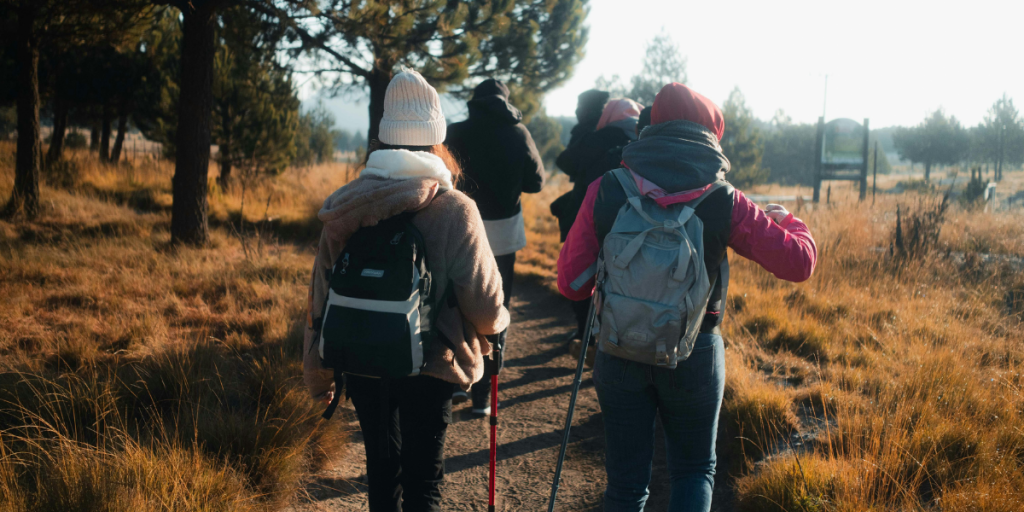
In addition, several studies have explored the experiences of individuals engaged in nature-based solitude (Kalish et al., 2011; Long & Averill, 2033). Participants have identified how being alone in nature brings about peace and a feeling of connectedness to place, as they notice and feel the wind, sun, and elements upon them. Native American writer N Scott Momaday writes that once in a person's life they ought to:
“Give himself up to a particular landscape in his experience, to look at it from as many angles as he can, to wonder about it, to dwell upon it. He ought to imagine that he touches it with his hands at every season, and listen to the sounds that are made upon it. He ought to imagine creatures there and all the faintest motions of the wind. He ought to recollect the glare of the moon and all the colors of the dawn and dusk” (as cited in Saraiya, 2022, p. 47).
While studies are often too quick to point out why such practices are beneficial to humans, perhaps incorporating more opportunities for nature-based solitude is a worthwhile PE practice from an ecological perspective as well. King et al, (2020) describe how our current environmental education practices focused on stewardship are often “shaped by anthropocentric views of human-nature dualism” (p. 2). Despite the best intentions, these pedagogies of stewardship reaffirm our dominance over, and distinction from, nature. The authors found that intentional play-based strategies and immersion in nature are effective in developing conservation practices and shared agency with the more-than-human world. A participant in the study describes that through these approaches, students learned there is more to love in the world than just their families. As De Line (2016) notes, family structures do not necessarily need to involve similar entities (i.e. human to human) but can be heterogeneous entities such as between human animals and the natural environment. Perhaps it is this love and formation of familial bonds that will not only improve mental well-being amongst humans but also promote conservation efforts that symbiotically erode our dualistic understanding.
Ecological Dynamics
In searching for an approach to PE that may be supportive of a posthumanist future while still facing present challenges of curriculum implementation in addition to other contextual barriers – Ecological Dynamics (ED) may provide such an avenue forward. Rudd et al. (2021) lament the traditional skill and drill approaches to PE that see the teacher demonstrate and then repetitively observe, correct, observe, correct…a set of pre-determined skills deemed to be important for lifelong participation, performed in the same facilities year after year. These approaches, rooted in cognitivism see the human brain as a computer – if the teacher inputs just the right amount of instruction, and provides enough practice, the students will then be able to output the skill more effectively. In contrast, Rudd et al. (2021) advocate for an ED approach, rooted in ecological psychology emphasizing a constant and reciprocal relationship between students and the environment. While this paper is primarily interested in the natural environment an ED view encompasses all environments, indoor and outdoor. Whereas the traditional approach sees skills as emerging from isolated practice and repetition, an ED approach views movement as emerging “from a self-organizing relationship formed between an individual, the task and the environment in which it occurs” (Rudd et al., 2022, pg. 296). EDs rejection of the ‘computerized’ and anthropocentric views of skill acquisition provide compatibility with a posthumanist view of education where learners understand how various environments provide affordances or opportunities for action and develop skills through task and environmental constraints. Guignard et al., (2020) took an ED approach to swimming, by conducting safety lessons in a natural environment (lake / ocean / river) which, despite the additional layers of risk, include many more affordances than a swimming pool. The rationale for doing so is that the natural setting requires students to adapt and develop skills to the changing environmental conditions (ride or avoid an incoming wave, treading in moving water, swim with a current) that cannot be reproduced in a swimming pool. In a separate study, Elnan (2025) had her students in Norway experience self-rescue skills in cold water exposure (e.g. falling through ice) where students described learning related to being able to control breathe and “pull myself together” (Elnan, 2025, pg. 11). Experiences which, again, cannot be replicated in a pool yet require functional adaptation of skills to a new environment. Perhaps, experiences such as these also promotes a deeper understanding and reverence of the power of nature, albeit not an explicit outcome of an ED approach. Non-linear pedagogy (NLP), a pedagogical principle arising from ED takes into account the different cadences and pathways learners will take towards skill acquisition while emphasizing an “explore-discover-adapt” (Rudd et al., 2020, p.4) approach that encourages students to utilize and explore affordances offered by an environment (rather than being told exactly what to do and how to do it). Consider, what affordances does a forest or nature park offer? To children, there is perhaps endless possibilities, many unbeknownst to their teacher. The open-ended and emergent nature of such an approach, and associated relational ontology (O’Connor et al., 2020), may provide a tangible avenue to engage with the tenants of land-based learning, animality and play presented earlier.
Human-Technology Entanglement
Before World War II, the human as a machine was a common metaphor in PE and sports dialogue. Our bodies were likened to machines, where heat produced by movement yields energy production. When viewing the body as an engine, the priority becomes ensuring the optimal function of that engine to ensure the best energy yield, and continued performance in difficult situations (Gleyse, 2013). While the metaphorical human-as-machine dialogue may have subsided, we still hear the human-machine glorified in sports, where being a machine is representative of a seemingly endless energy supply or robotic demeanor. As Snaza (2014) points out, students in school are often still part of machine-like training. Students in PE learn to sit quietly in rows for attendance, to observe the teacher's demonstration of technique, to replicate that technique, to play in the game as instructed, to sweat, to shower and change, and repeat year after year in different activities until the last compulsory year of PE.
How we view the relationship between humans and machines can depend on the perspective we take regarding transhumanism and our current entanglement with technology. Transhumanism is a set of beliefs that technology will empower humans with the intellectual, physical and psychological capabilities that far surpass our current capabilities (Huberman, 2021). On one hand, if we consider technological enhancement for purely its ability to enhance human capabilities, this non-reciprocal relationship may qualify transhumanism as a humanistic approach (Ferrando, 2017; Wilson, 2023). On the other hand, Wolfe (2010) suggests that transhumanism is simply a strand of posthumanism, or a middle ground on the road to becoming fully posthuman, where a distinction between human and machine is no longer possible (Wolfe, 2010). At present, are technology and humans two binary entities? If so, in any search for symbiosis, we will perhaps come up empty-handed. However, if we entertain the idea that even in our current state, we are no longer simply human, but instead transhuman (or even posthuman), then the need for any semblance of symbiosis is moot, as we are no longer in a relationship to technology but instead united with technology (Hayley, 1999).
In the long term, it is somewhere between frightening and exciting to think about watching our mind clone digital offspring participating in future forms of sport or catching passes from a digital avatar of a famous athlete (Huberman, 2021). However, the idea of technologically enhanced humans is not new. Technology doping refers to the illegal use of technological enhancements in sport that are deemed to give an unnatural advantage (Institute of Mechanical Engineers, 2012). Polyurethane swimsuits, carbon-plated footwear, and prosthetic limbs are examples of technology capable of enhancing human performance beyond what is believed to be ‘naturally’ achievable. In the era of wearable tech, individuals can monitor heart rate, and blood-glucose levels, analyze sleep patterns, or use artificial intelligence to design nutrition and fitness programs. Hypershell, a tech company based in Shanghai, with a mission to “accelerate a world where curiosity, capabilities and choice are liberated from the body’s limits”(Hyphershell 2025) have developed an AI exo-skeleton that augments human strength and endurance for outdoor activities which perhaps creates new opportunities for those both abled and less-abled. As Ok et al, (2024) outline, shortly we may be able to detect other neurochemicals such as cortisol through implantable tech, which would enable a near real-time response for managing stress, anxiety, and other aspects of mental well-being. The advances of machine learning provide an interesting opportunity to further enhance learning. As Zimmerman-Niefeld et al, (2019) describe, machine learning allows the creation of systems that can process real-world events. The authors describe how young students may be able to build machine learning models of their skill performance, and by wearing sensors, can embody their own data set to provide real-time feedback or even learn skills passively. This potentially minimizes the time required to effectively demonstrate competence in a skill and convert it to muscle memory, thus negating the reliance on a teacher to provide corrective technical feedback. Through these approaches, the discourse begins to shift from what one can do with technology, but instead what one can do as a technologically embodied human (or trans/post-human).
Conclusion
This paper outlines a post-humanistic approach to physical education that addresses the declining well-being of our present human and non-human worlds. In a reimagined posthumanist approach to Physical Education, students experience greater autonomy and joy in their experience, they explore a variety of playscapes throughout the seasons. Students engage in rough and tumble play, enhancing their creativity and social connectedness. Through these practices students recognize their similarity to animals, building a foundation for more peaceful coexistence in the more-than-human world. Students spend time outdoors in solitude, learning to see the world with two eyes, and developing a newfound regard for the earth as family. This connectedness may help students to find calm in their busy lives, manage stress, and develop a loving relationship with the environment that may lead to more sustainable and holistic conservation efforts. Through a consideration of self as a technology-enhanced human, students can conceivably monitor their own biological health markers and develop physical competencies at a much faster rate. Each of these practices is governed neither by race, gender nor colonial perspectives and thus opens the door to a more equitable and inclusive future.
In many contexts, these approaches may be viewed as a drastic and radical reform of the humanistic and unjust practices that PE often employs. However, as Snaza & Weaver (2015) suggest, perhaps by seeming so far outside the realm of possibility, it may explode the tired educational debates. In doing so, we reorient ourselves towards a healthier more-than-human world.
References
Brown, S. L., & Vaughan, C. C. (2010). Play: how it shapes the brain, opens the imagination, and invigorates the soul (1st. ed.). Avery.
De Line, S. (2016, July 7). All my/our relations: Can posthumanism be decolonized? Open! Platform for Art, Culture & the Public Domain. Retrieved from https://www.onlineopen.org/all-my-our-relations
Donald, D. (2021). We Need a New Story: Walking and the wâhkôhtowin Imagination. Journal of the Canadian Association for Curriculum Studies, 18(2), 53–63. https://doi.org/10.25071/1916-4467.40492
Elnan, I. (2025). Pupils’ experiences of aquatic education as a meaningful activity in physical education. Sport, Education and Society, 1-15. DOI: 10.1080/13573322.2025.2532137
Ferrando, F. (2017, December 7). What is Posthumanism? Dr. Ferrando (NYU) - Course “The Posthuman” Lesson n. 3. YouTube. https://www.youtube.com/watch?v=hm9zkvHVkL4
Forencich, F. (2006). Exuberant animal : the power of health, play and joyful movement. AuthorHouse.
Gray, P., Lancy, D. F., & Bjorklund, D. F. (2023). Decline in Independent Activity as a Cause of Decline in Children’s Mental Well-being Summary of the Evidence. Journal of Pediatrics, 260, 113352. doiorg.login.ezproxy.library.ualberta.ca/10.1016/j.jpeds.2023.02.004
Guignard, B., Button, C., Davids, K., & Seifert, L. (2020). Education and transfer of water competencies: An ecological dynamics approach. European Physical Education Review, 26 (4), 938–953. https://doi.org/10.1177/1356336X20902172
Hayles, N. K. (1999). How we became posthuman : virtual bodies in cybernetics, literature, and informatics. University of Chicago Press.
Hebert, G. (2009). Practical Guide of Physical Education (Pilou & Gregg trans.). Vuibert et Nony (original work published 1912).
Huberman, J. (2021). Transhumanism : from ancestors to avatars. Cambridge University Press. Institute of Mechanical Engineers (2012) Sports engineering: an unfair advantage? Improving the world through engineering [report].
Hypershell. (2025, July 25). About Us. https://ca.hypershell.tech/pages/about-us
Khatib, M., Sarem, S. N., & Hamidi, H. (2013). Humanistic Education: Concerns, Implications and Applications. Journal of Language Teaching & Research, 4(1), 45–51. https://doi-org.login.ezproxy.library.ualberta.ca/10.4304/jltr.4.1.45-51
King, H., Beazley, H., Barclay, L., & Miller, A. (2024). Re-imagining child-nature relationships in ecotourism: children’s conservation awareness through nature play and nature-based learning. Children’s Geographies. https://doi-org.login.ezproxy.library.ualberta.ca/10.1080/14733285.2024.2308008
Klein, N., & Beach, P. (2023). Play-Based Learning in Elementary Physical Education. Journal of Physical Education, Recreation & Dance, 94(2), 59–61. https://doi-org.login.ezproxy.library.ualberta.ca/10.1080/07303084.2022.2146957
Krakauer, J. (2019, August 26). Gates of the Arctic in Classic Krakauer: Essays on Wilderness and Risk. Publishers Weekly, 2019.
Lima, D.M. & Mitchell, C. (2024, February 14). Dances/Land Relationship of Indigenous Peoples. ReVista. https://revista.drclas.harvard.edu/photovoice-dances-land-relationship-of-indigenous-peo
ples/
Marques, A., Gómez, F., Martins, J., Catunda, R., & Sarmento, H. (2017). Association between physical education, school-based physical activity, and academic performance: a systematic review. Retos: nuevas tendencias en educación física, deporte y recreación. 31, 316-320.
Morris, M. (2015).Posthumanist Education and Animal Interiority. In Snaza, N. & Weaver, J.A. (Eds), Posthumanism and Educational Research (pp. 1-17). Routledge, 2015.
Miller, A. (2015). Losing Animals: Ethics and Care in a Pedagogy of Recovery. In Snaza, N. & Weaver, J.A. (Eds), Posthumanism and Educational Research (pp. 1-17). Routledge, 2015.
O’Connell, C. (2021). Why Animals Play. Scientific American, 325(2), 48–55.
Ok, J., Park, S., Jung, Y. H., & Kim, T. I. (2024). Wearable and Implantable Cortisol-Sensing Electronics for Stress Monitoring. Advanced materials (Deerfield Beach, Fla.), 36(1), e2211595. https://doi.org/10.1002/adma.202211595
O’Sullivan, M., Davids, K., Woods, C. T., Rothwell, M., & Rudd, J. (2020). Conceptualizing Physical Literacy within an Ecological Dynamics Framework. Quest (National Association for Kinesiology in Higher Education), 72(4), 448–462. https://doi.org/10.1080/00336297.2020.1799828
Riley, K., Chow, A. F., Wahpepah, K., Humbert, M. L., Brussoni, M., Houser, N., & Erlandson, M. C. (2023). Etuaptmumk (Two-Eyed Seeing) in Nature’s Way-Our Way: braiding physical literacy and risky play through Indigenous games, activities, cultural connections, and traditional teachings. AlterNative, 19(2), 426–436. https://doi-org.login.ezproxy.library.ualberta.ca/10.1177/11771801231167881
Rudd, J. R., Pesce, C., Strafford, B. W., & Davids, K. (2020). Physical Literacy - a journey of individual enrichment: an Ecological Dynamics rationale for enhancing performance and Physical Activity in All. Frontiers in Psychology, 11, 1904. https://doi.org/10.3389/fpsyg.2020.01904
Rudd, J. R., Woods, C., Correia, V., Seifert, L., & Davids, K. (2021). An ecological dynamics conceptualisation of physical “education”: Where we have been and where we could go next. Physical Education and Sport Pedagogy, 26(3), 293–306. https://doi.org/10.1080/17408989.2021.1886271
Rushowy, K. (2015, December 9). Recess roughhousing leads to restriction on playing tag. The Toronto Star, GT1.
Saraiya, S. (2022, September 1). The Legends Live On: “If we can learn to understand the ways of the native people, these sacred lands will bring us back to our own humanness and remind us of our connection with all living beings on this earth.” USA Today
(Magazine), 151(2928), 42.
Snaza, N. & Weaver, J.A. (2015). Introduction: Education and the Posthumanist Turn. In Snaza, N. & Weaver, J.A. (Eds), Posthumanism and Educational Research (pp. 1-17). Routledge, 2015.
Van Acker, R., da Costa, F. C., De Bourdeaudhuij, I., Cardon, G., & Haerens, L. (2010). Sex Equity and Physical Activity Levels in Coeducational Physical Education: Exploring the Potential of Modified Game Forms. Physical Education and Sport Pedagogy, 15(2),
159–173.
Wilson, K.D. (2023). Technological Posthumanism and Human-Machine Symbiosis. Posthumanism and the Ecological Crisis. Brainware University.
Wolfe, Cary. (2010). Introduction: What is Posthumanism? What is Posthumanism? Cary Wolfe, U of Minnesota P.
Authors