To Learn, To Love, To Move: Branding a Future in Physical Education

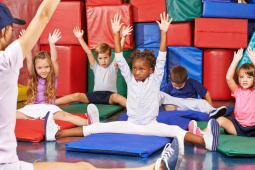
Five-year-old Ilay walks into the sports hall for the first time in Kindergarten. With a look of awe, as she had never seen a room this size, she says, “What is this room for?” “It’s for physical education,” Ms. Lee says. Next, from the mouths of babes comes a question that has troubled the field for generations: “What is physical education?” It has been said that if we truly understand a concept, we can explain it to a five-year-old. Have you ever considered that simple question? What is it? Well, how would you explain it? Ms. Lee said, “It helps us To Learn, To Love, To Move.” This is not just a simple anecdote; it is the story of what happens when we rethink how we present PE to children and everyone.
“To Learn, To Love, To Move” is not just a tagline—it is a philosophy. It captures the purpose of PE in three stages: intuitive, emotional, and deeply human. These stages or domains of learning (skills, knowledge, and attitudes) have long been thought to be the foundation of the learning experiences in physical education (Davis, et al, 2023). However, this slogan reframes physical education away from performance-based competition and toward inclusion, growth, and joy. It works for students like Ilay, and it resonates just as powerfully with teachers, parents, and policymakers.
Each phrase in the explanation of PE plays a crucial role:
- To Learn is the foundation. It speaks about acquiring skills, knowledge, and attitudes for lifelong movement through experiences. Learning is the essence of education. Physical education involves developing motor skills, understanding the benefits of movement, and learning about different sports and activities.
- To Love reflects the emotional connection. It is about building confidence, finding joy in physical activity, and making positive associations with moving our bodies. To Love also nods to the teaching of the foundation of social and personal responsibility – being kind. Finding love in physical education involves developing a positive relationship with the body, a desire to learn and improve skills, and a willingness to participate in activities that promote physical and mental well-being.
- To Move speaks to the venue, the process, and the behavior. When children and adults learn and love movement, they choose to move—not because they have to, but because they want to. To move also encapsulates Arnold’s “in, through, and about” movement (1979). The movement process in physical education refers to any form of bodily movement that engages muscles and expends energy, ranging from simple movements like walking to more complex activities like running, jumping, or playing sports.
In an era when childhood inactivity is rising and mental health issues are increasingly linked to sedentary lifestyles, PE has never been more essential. However, it has long struggled with a “muddled mission” lacking a clear, consistent, or concise purpose (Pate & Hohn, 1994). Ask most adults what PE means to them, and they will recall dodgeball games, elimination games, fitness tests, or standing on the sidelines. These memories do not always evoke a sense of lifelong movement or joy—they evoke awkwardness, embarrassment, and even exclusion (Cardinal, Yanowitz, & Cardinal, 2013). “To Learn, To Love, To Move” contradicts those outdated narratives. It emphasizes growth, not grades, fun, not fear, and lifelong health, not one-off performance. This matters because branding shapes behavior. If we want children to value PE, we need to speak their language and reshape what PE means in their cultural imagination.

In marketing, the best brands are often built on the simplest messages. Think “Just Do It” and “Think Different.” These are not detailed manifestos. They are short, sticky, and powerful. They tell a story in just a few words. “To Learn, To Love, To Move” fits this model perfectly. It is memorable, emotionally resonant, rolls off the tongue, and sticks in the mind. More importantly, it tells a clear story that aligns with modern understandings of child development, physical literacy, and inclusive education. This is not just smart linguistics. It is strategic branding. Good branding does not just sell a product—it changes perceptions. It changes behavior. It builds identity. Furthermore, that is precisely what we need for PE: an identity, one that’s rooted in learning, loving, and lifelong movement.
What makes this phrase even more remarkable is its universality. While it may have emerged in school PE settings, it applies across the lifespan. Adults, older adults, people with disabilities, new movers, and elite athletes benefit from learning, loving, and choosing to move.
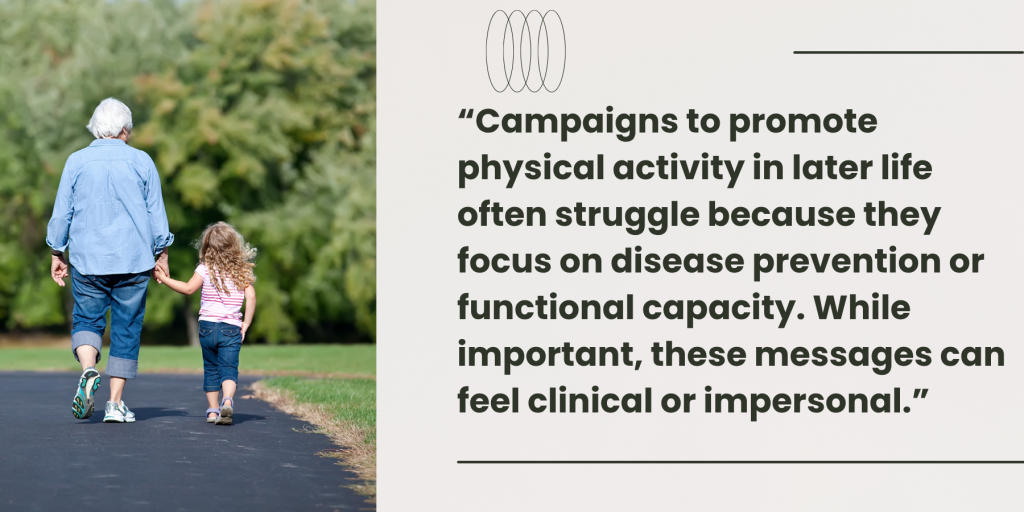
Take older adults, for example. Campaigns to promote physical activity in later life often struggle because they focus on disease prevention or functional capacity. While important, these messages can feel clinical or impersonal. However, “To Learn, To Love, To Move” has a different tone. It invites curiosity. It emphasizes enjoyment. It encourages an agency. Similarly, this phrase is a gift for parents trying to build healthy family habits. It breaks things down in a way that feels doable. You do not need to be an expert to help your child explore movement. You just need to support their learning, nurture their love of activity, and give them chances to move. This approach is inclusive. It’s accessible. And crucially, it’s empowering.
“To Learn, To Love, To Move” as a guiding principle fosters student engagement, parent support, and staff clarity. It becomes more than a slogan—it becomes a lens for curriculum planning, a way to evaluate lessons, and a north star for professional development.
In practice, it might look like:
- Designing PE units that build from simple skills to expressive, creative movement.
- Creating a culture where enjoyment is celebrated just as much as achievement.
- Giving students a voice in the activities they try.
- Celebrating effort and growth, not just performance.
The phrase also supports cross-disciplinary collaboration. Health educators, mental health professionals, and classroom teachers can all find their place within this framework. Because it is not just about sport, it is about learning to move well, enjoying it, and making it a part of life.
Parents entrust the education journey with their children's future, hoping schools will equip them with the skills, knowledge, and values needed to thrive. This includes academic success, personal development, and building a foundation for future opportunities. They also expect education to foster independence, resilience, and a love for learning. Parents who value physical education see its benefits extend beyond athletic skills, recognizing the positive impact on students' overall well-being, including their mental health, academic performance, and social development. They may actively support their children's PE participation and encourage healthy habits at home. When parents value the practice of guiding students to learn to love to move, they are likely to encourage their children to participate in physical activities throughout their lives. They recognize the long-term benefits of maintaining an active lifestyle and strive to create a positive environment where their children feel motivated and supported in their physical activity choices.
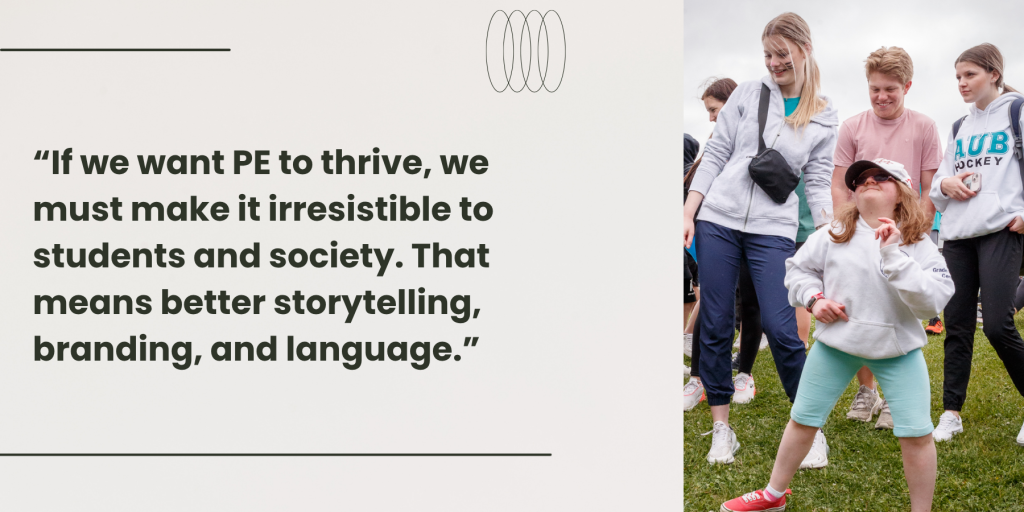
If we want PE to thrive, we must make it irresistible to students and society. That means better storytelling, branding, and language. “To Learn, To Love, To Move” is precisely the phrase that can carry this weight. It is adaptable. It can appear on posters, social media, curriculum documents, and campaign materials. It can lead to conversations at staff meetings and conferences. It has rhythm, meaning, and heart. Most importantly, it has truth. Because when you talk to the Ilays of the world—those who find themselves, maybe for the first time, feeling excited to move—it is never just about fitness or grades. It is about discovering something new, enjoying it, and wanting to come back for more. The best outcome of quality PE is more PE (Quennestedt, 2019)
“To Learn, To Love, To Move” is more than a clever phrase. It’s a mission, a mindset, and, if we let it, it could be the mantra that defines a healthier, happier future for us all. In education, words matter. The right ones can shift culture, change perceptions, open doors, and attract people. “To Learn, To Love, To Move” is one of those phrases. It brings clarity, energy, and purpose to PE. It celebrates joy without sacrificing rigor. It embraces simplicity without dumbing things down. It is, in every way, the branding Physical Education needs and deserves. If we are lucky, it might help every child, teacher, and adult remember what movement is about: not just doing it but loving it.
References
Arnold, P. J. (1979). Meaning in Movement, Sport and Physical Education. London: Heinemann.”
Cardinal, B. J., Yanowitz, D. B., & Cardinal, M. K. (2013). Recollections of physical education: Experiences and attitudes of adults toward physical education and physical activity. Journal of Teaching in Physical Education, 32(4), 375–393. https://doi.org/10.1123/jtpe.32.4.375
Davis, M., Gleddie, D. L., Nylen, J., Leidl, R., Toulouse, P., Baker, K., & Gillies, L. (2023). Canadian physical and health education competencies. Ottawa: Physical and Health Education Canada.
Pate, R. R., & Hohn, R. C. (1994). Introduction: A contemporary mission for physical education. In R. R. Pate & R. C. Hohn (Eds.), Health and fitness through physical education (pp. 1–8). Human Kinetics.
Quennerstedt, M. (2019). Physical education and the art of teaching: Transformative learning and teaching in physical education and sports pedagogy. Sport, Education and Society, 24(6), 611–623. https://doi.org/10.1080/13573322.2019.1612347
Shirotriya, A. K., & Beighle, A. (2023). Physical education moving from marginalized to materialized. Journal of Physical Education, Recreation & Dance, 94(9), 39–43. https://doi.org/10.1080/07303084.2023.2260440
Authors