Building Connection, Leadership, & Belonging: The Student Experience at the 2026 PHE National Conference
“My experience as a student at PHE National Conference was nothing short of incredible. Being surrounded by some of the best physical and health educators in the country makes for not only an inspiring and engaging environment, but also one that supports student voice. Being a student at such a large conference can be intimidating, but everyone that I spoke to or engaged with was kind, thoughtful, and made it very clear that they valued my experience as a student entering this practice. From the student experience events to the wealth of knowledge being passed around every room, the conference was a space where I was able to build confidence, relationships, and resources.”
– Mya Slawter, StFX University Student Chapter Co-President
This year’s Physical and Health Education National Conference in Vancouver marked an exciting step forward for enhancing the student experience and strengthening connections among the next generation of PHE leaders. Through intentionally designed networking opportunities, active experiences, mentorship moments, and student-led initiatives, the conference created meaningful spaces for pre-service educators to build relationships and deepen their sense of belonging within the profession.
Elevating the Conference Student Experience Through Student Voice
To enhance the student experience at this year’s conference, PHE Canada established its first-ever Student Experience Planning Committee—grounded in the belief that the best way to create relevant opportunities and experiences for students is by listening to and implementing direct student voice and choice.
This passionate group of student leaders played an instrumental role in planning engaging events, networking opportunities, and social experiences that helped foster connection, belonging, and community throughout the conference. To achieve this, the group decided that the student experience should be built around four key pillars: Belonging, Movement, Leadership, and Learning.
These pillars guided the creation of a new and exciting feature to the Student Experience: the Student Passport!
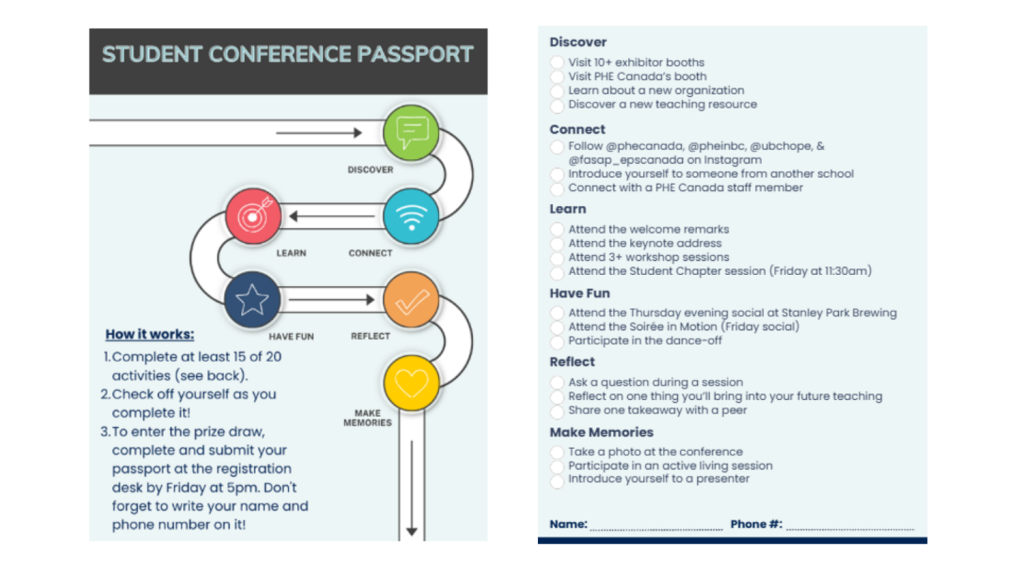
The Student Passport was intended to help motivate students to step outside their comfort zones, maximize their conference experience, and build meaningful connections by completing a variety of networking, learning, movement, and social “checkpoints.” Students who completed and submitted their passports were then entered into prize draws, adding an extra layer of excitement and engagement to the initiative.
Ideas like this from the Student Experience Planning Committee shaped a conference experience that was relevant, welcoming, student-centered, and memorable for all. A huge thank you goes out to the students from the UBC HOPE Student Chapter (Jayden, Marci, Kaila, and David) and the students from Université de Sherbrooke Student Chapter (Carole-Anne and Camille) for the time, creativity, and energy they devoted to planning activities not only for students, but for all conference delegates to enjoy. Whether it was the Rubber Chicken Games, the new Student Passport, or the crowd-pleasing trivia at the Thursday evening social, their leadership and collaboration showcased the incredible impact that student voice and choice can have on growing professional learning communities and creating memorable experiences at the PHE National Conference.
Community Building & Meaningful Connections: The First-Ever Rubber Chicken Games ?
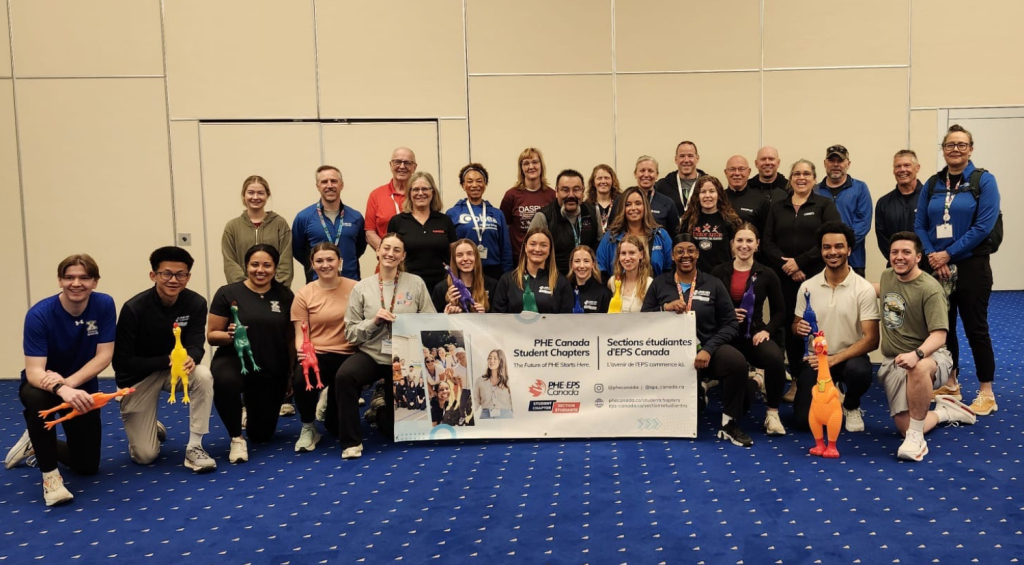
One of the most memorable highlights of the conference was the launch of the first-ever Rubber Chicken Games (RCG). The RCG was created to help students, many of whom are newer members of the PHE community, to feel welcomed, connected, and valued from the very beginning of the conference. Led by the UBC HOPE Student Chapter, this fun, low-pressure event focused on the feeling of joy that’s experienced through movement and teamwork to help students build friendships, strengthen connections with peers and PHE mentors, and create positive early experiences that fostered a stronger sense of belonging within the PHE community.
To kick off the RCG, Kellie Baker, president of PHE Canada, and Josh Ogilvie, president of PHE BC, gave a warm welcome to the conference message to students, emphasizing how the theme of 'Together We Rise' is integral to every aspect of the student experience. They encouraged students to embrace every opportunity offered at the conference, as the connections they forge could lead to lifelong friendships, professional collaborations, and mentorship and career opportunities. Kellie and Josh also reminded students that they are already leaders of the PHE community and will one day be members of PHE Canada’s Board of Directors and provincial and territorial PHE organizations, PHE researchers, advocates, and mentors, continuing to shape the profession for years to come. They finished by urging students to introduce themselves to the presenters and exhibitors, connect with mentors, ask questions, and build relationships throughout the week, as all the experienced PHE leaders and champions around them are there to encourage and support them on their leadership journeys in Physical and Health Education.
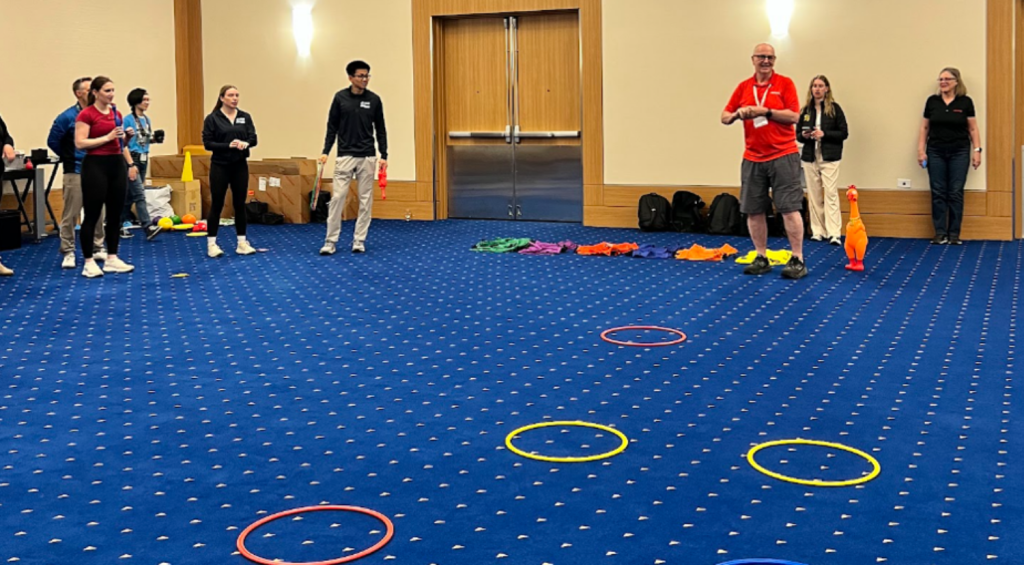
To get the official games started, Dr. John Byl, Canadian Gopher Sport Educational Consultant, warmed up the group by running a series of creative and interactive rubber chicken-based icebreakers. Immediately, the room filled with positive energy and laughs. These activities encouraged participants to mingle, step outside their comfort zones, and instantly connect with fellow students and PHE mentors from across the country. PHE Canada and the Student Experience Committee would like to thank John and Gopher for their generous support, partnership, and equipment donation that enhanced the RCG experience.
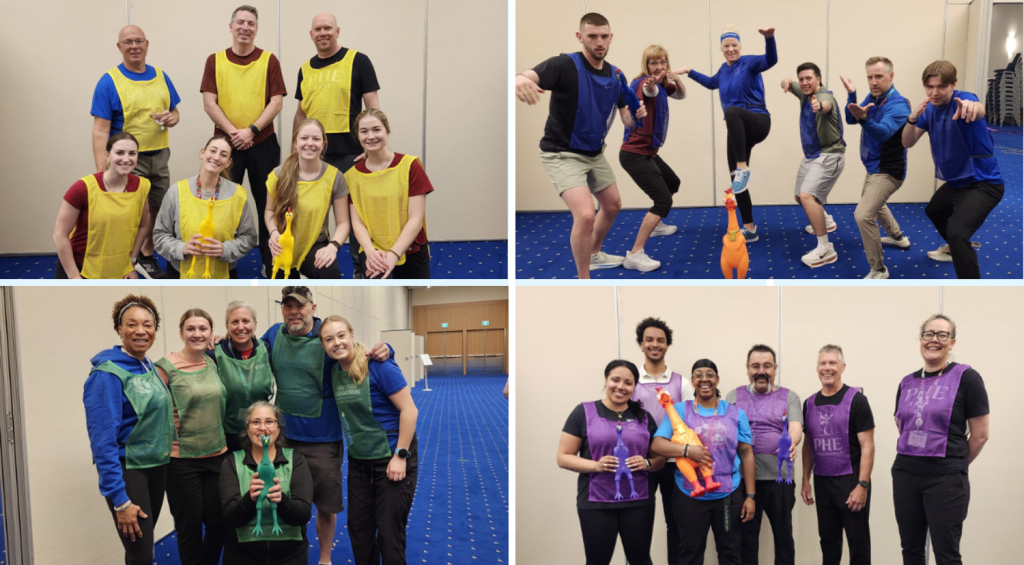
Following the icebreakers, the UBC HOPE Student Chapter divided participants into four teams, which had an even split of students (e.g., pre-service educators), early-career educators (e.g., student chapter alumni members within their first 3 years of teaching), and PHE leaders and champions (e.g., PHE Canada Board of Directors, Provincial/Territorial PHE Organizational Leads, National Award Winners).
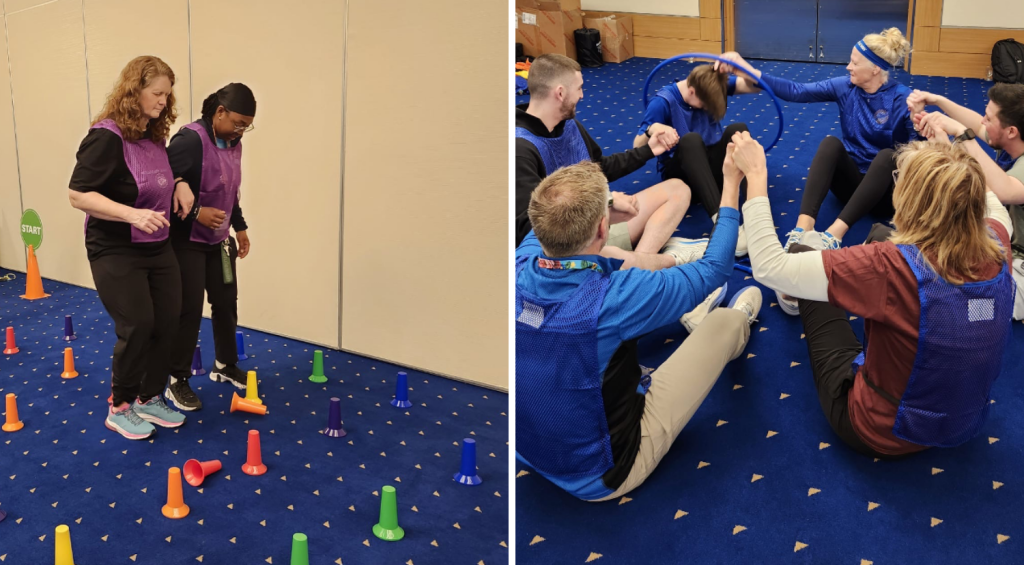
Teams Yellow, Blue, Green, and Purple competed in a variety of teamwork-focused movement challenges that emphasized collaboration, communication, creativity, and fun. It was amazing to witness students and mentors cheering one another on, laughing together, and building memories that will last a lifetime.
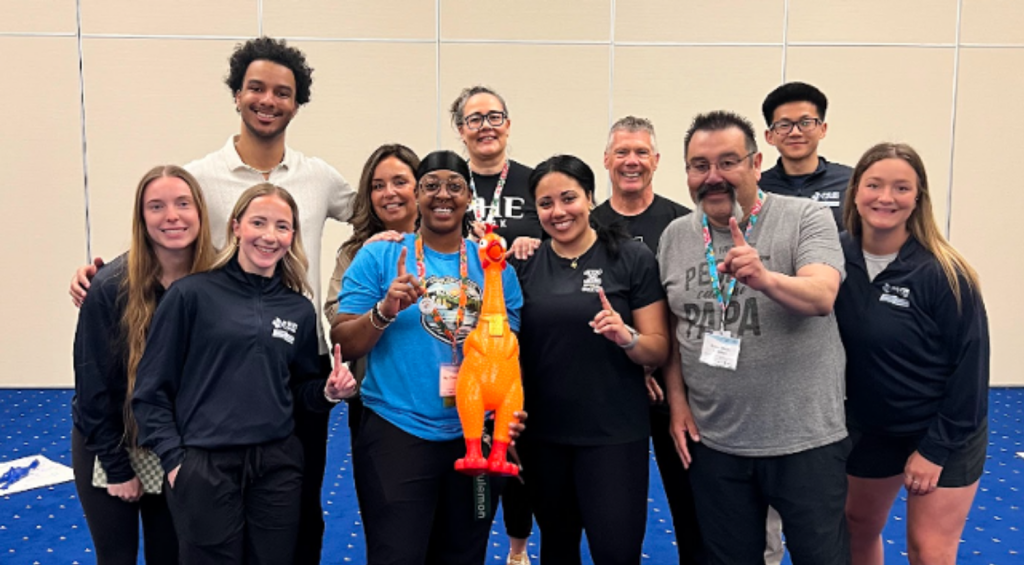
After an intense, friendly competition, the Purple Team emerged victorious and earned the honour of taking home the first-ever Rubber Chicken Games Trophy—a towering 2.5-foot rubber chicken masterpiece (official name still up for debate!). The trophy will spend the first semester of next academic year at StFX University before travelling to Brock University for the second semester and eventually making its return to New Brunswick for the 2027 PHE National Conference. The question now becomes, "Which university will take the trophy home next year?"
After the event, it was very special to see the students and PHE mentors continue to chat and connect throughout the conference. Whether I was walking around the exhibitors' tables, switching between sessions, or enjoying the Friday night Soiree, I would often overhear mentors and students shouting, "Go, team blue!" or “Let’s go, purple!" anytime they saw their teammates. The success of the first-ever Rubber Chicken Games served far more than just as a fun event—it helped create an immediate sense of community and belonging for students, reminding them that they are valued members of the PHE community who will be supported as the future leaders and champions of the profession.
Student Leaders Shaping the Future of PHE: The PHE Canada Student Chapter Showcase
“The student chapter presentation session was a great way to promote activities, events, and workshops that have been successful to other student chapters and connect/share ideas that are upcoming. This experience also allowed us to plan and innovate for future collaborative experiences. Outside of the student chapters themselves, this was a great event to connect with other professionals in the field and get their input on how to future-proof our initiatives and further connect with the H&PE community.”
– Braeden Powell, Brock University Student Chapter Co-President
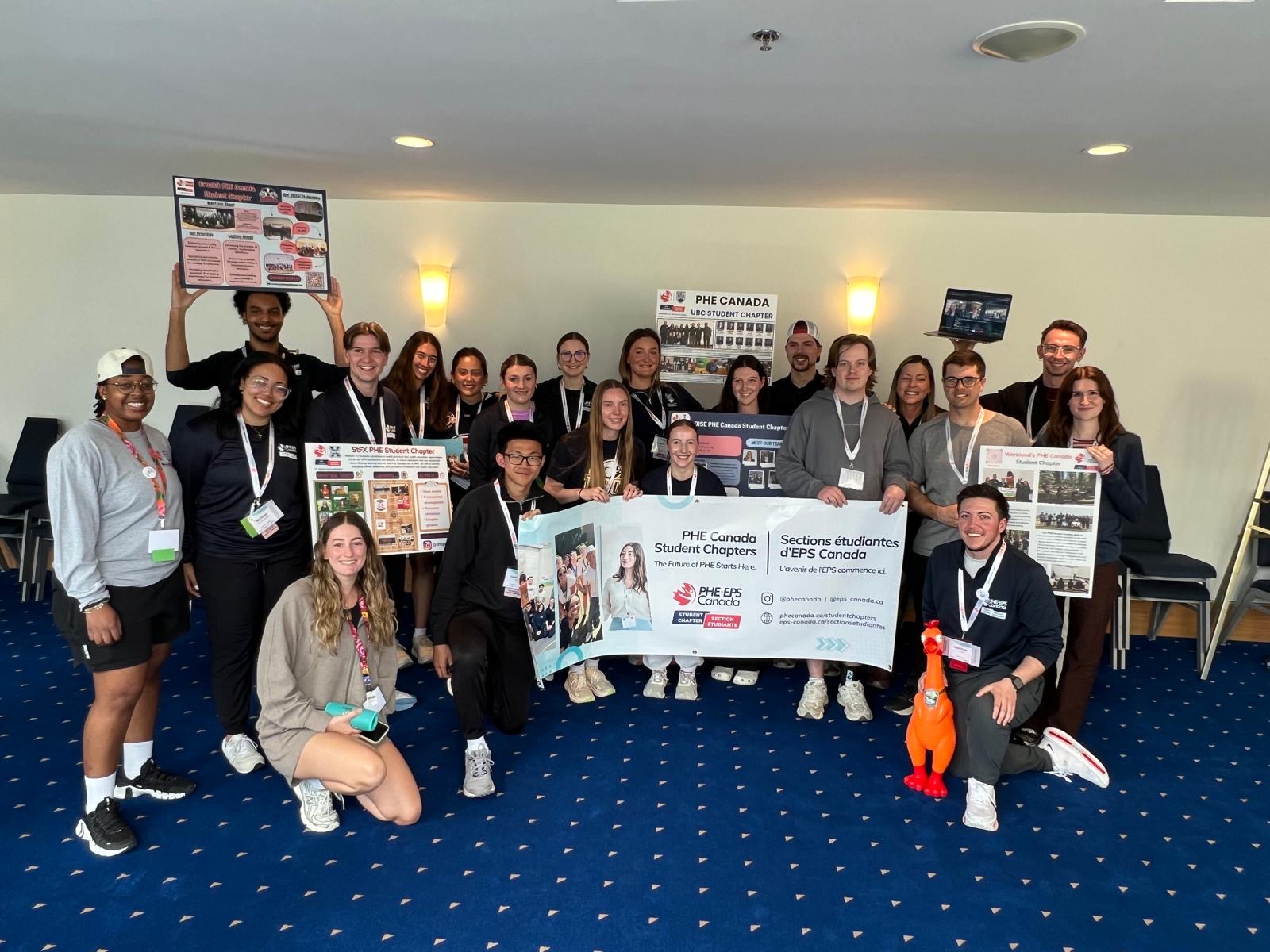
Another major and successful student-focused event of the conference was the Student Chapter Showcase—a powerful session that highlighted a growing national network of student leaders and PHE advocates, the PHE Canada Student Chapters (PHECSCs)!
The session was designed as a dynamic speed networking experience where attendees could connect directly with student chapter leaders from many Bachelor of Education programs across the country. 12 PHECSCs were represented at this event, consisting of 20 pre-service educators, 4 student chapter alumni (e.g., early-career educators), and 11 chapter advisors (e.g., faculty members). Shoutout to Danielle Bates, the first-ever OTU Student Chapter president & PHE Canada Board member, for coordinating a virtual presentation opportunity for the current OTU Chapter presidents who were unable to attend in person.
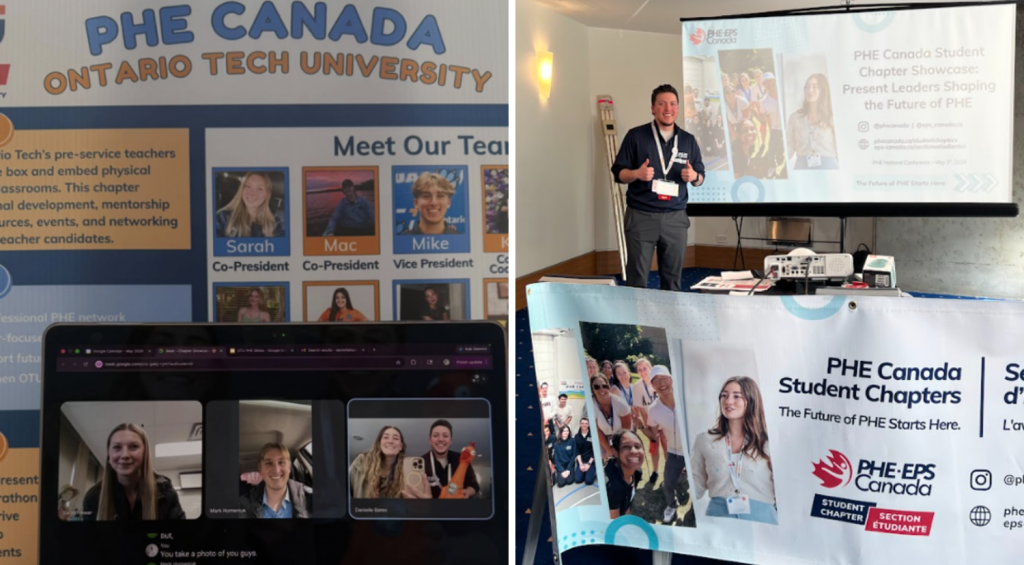
Each student chapter had its own station set up in the room. In small groups, participants would circualte and learn about the initiatives, events, and partnerships these chapters are leading to empower pre-service educators to deliver quality PHE, daily physical activity, healthy school communities, and educator and student well-being in future K-12 schools. When the Rubber Chicken trophy would squeal (yes, it was used as a signal to tell participants to move to a different chapter), PHE Canada Board members, Council of Provinces and Territories representatives, national award winners, mentors, and other experienced PHE leaders from across Canada would rotate to a different station and interact with the PHECSC members presenting.
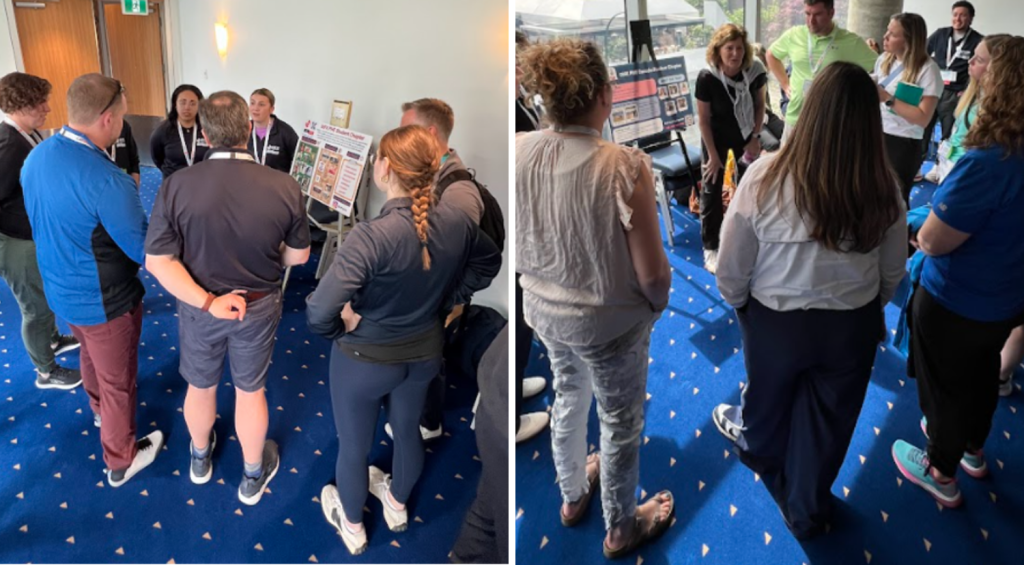
These conversations created valuable opportunities for experienced leaders within the profession to hear directly from students about their experiences, passions, and visions for the future of PHE. Attendees learned how PHECSC leaders are positively impacting the PHE teacher training programs at their institutions through leadership and advocacy skill development, community building, and free professional development opportunities for their pre-service educator peers they offer. In addition, students shared what they learned, how their involvement influenced their PHE educator identity, and why they are ready to enter the profession with confidence and competence in delivering quality PHE.
What was very inspiring about this event were the mutually beneficial opportunities this showcase provided for the students and attendees. For example, while the student leaders shared their experiences and chapter stories, they were building meaningful connections, expanding their networks, exploring future collaborations, and receiving mentorship from the PHE community leaders and champions in the room. Everyone left with a better understanding of how the PHECSCs are creating invaluable opportunities for pre-service educators to build leadership skills, strengthen professional identity, and develop an advocacy mindset to shape the future of quality PHE. The energy was palpable. You could truly feel the stronger sense of belonging within the PHE community that the students were experiencing and the confidence they were gaining as emerging leaders within the field.
The Student Chapter Showcase reinforced the importance of creating spaces where student voice is valued, amplified, and celebrated within national professional communities. All of the students left feeling motivated to continue the good work they are doing when they return to their universities and to prepare to share their stories again at next year’s PHE National Conference in New Brunswick.
Looking Ahead
The enhanced student experience features at this year’s conference demonstrated the incredible energy, leadership, and passion that exists within the PHE Canada Student Chapter community. From active networking events and mentorship opportunities to student-led showcases and social experiences, students were empowered to build meaningful relationships, develop professionally, and strengthen their connection to the broader PHE community, all while making the most of their time at the conference.
As the Student Chapter network continues to grow across Canada, we encourage organizations, educators, and PHE leaders to connect with and support these emerging leaders as they continue to build partnerships, advocate for quality PHE, and shape the future of the profession.
Be sure to check out the PHE Canada Student Chapter webpage to access their social media handles and learn about how these student leaders are making a difference within pre-service teacher education across the country.
Authors