You Belong Here: Five Strategies for Inclusive Physical and Health Education
I still remember what it felt like to be that kid—overweight, unsure, and already learning the unspoken rules about who gets to be chosen. In physical education class, I was often left out. I was not picked for teams. I was not given a role. Other kids told me, “You can’t play that,” and many teachers agreed with their silence.
I learned quickly that physical education was not for me. I internalized the belief that movement belonged to certain bodies. That health had a particular look, and it was not mine.
And I was not the only one. I have seen other students excluded too—not just because of body size, but because of how they moved, how they looked, how they identified, or how others perceived them.
While education has evolved since the late 1980s and early 1990s, many of the same patterns persist. In too many schools, Physical and Health Education (PHE) remains a space where students' bodies, identities, and social standings are under scrutiny.
Students learn constantly—not only from what we say but also from what we do not say. They learn who gets to be physical, who belongs in the activity, whose health matters, who is expected to lead, who gets to sit out, who is coached with care, and who is left on their own. Sometimes this learning comes through the rules we set.
Sometimes it is embedded in who we make space for. Either way, the lessons leave a mark.
Those lessons ripple outward, shaping confidence, identity, how students take up space, how they understand health, and whether they feel like they belong—in school, in community, or in their own bodies.
I am not a PHE teacher. But I work alongside them, listening, asking questions, and helping unpack what inclusion and belonging could truly look like. When PHE spaces are rooted in care and inclusion, students move differently. They show up differently.
Through the lens of Equity by Design and in collaboration with educators around the world, I have learned a great deal about what inclusive PHE can look like. While I will focus on two of the five Equity by Design principles here, these strategies are also grounded in culturally responsive, relevant, and sustaining practices observed and shaped across diverse school communities.
This is not a final list. There is no magic formula or fast fix. These are simply five grounded, human-centered strategies to help design PHE spaces where more students can thrive, move, laugh, and feel like they belong.

1. Design at the Margins
When we design with those most often excluded in mind, we create something better for everyone.
Designing at the margins is more than a strategy—it is a mindset. It means starting with the students most frequently left out or harmed by our systems and routines. Not to fix them or bring them in, but because they offer valuable insight into how we can build something more inclusive and effective for all.
This approach extends beyond who gets picked for the team. It includes who is centered in conversations about nutrition, mental health, sexuality, and safety. Who is affirmed, and who is pathologized. Who gets to explore all aspects of their identity, and who is reduced to one.
In practice:
- Identify the margins during lesson planning. Ask: Who is this least designed for? Let that question shape your adjustments.
- Invite students into co-design. Ask: What makes you feel safe, strong, or seen—both in movement and in conversations about health and your body? Use their insights to shape routines and learning.
- Reframe classroom language and roles. Replace terms like "captain" or "MVP" with "connector," "encourager," or "strategist" to redefine what leadership can look and feel like.
Designing at the margins does not mean lowering expectations. It means expanding access and meaning. When students see themselves in the design, they show up differently—because the space finally sees them too.
2. Make the Invisible Visible
Every space has norms. The important question is: who created them and whom do they serve?
Making the invisible visible involves naming the norms we often treat as neutral—those that send students implicit messages about who matters and who does not. Students are constantly learning what is considered “normal,” “ideal,” “valuable,” and “healthy enough,” even if these lessons are never spoken aloud.
Often, these norms are wrapped in whiteness, thinness, ableism, and gender conformity. If we do not name these patterns, we risk reinforcing them.
In practice:
- Unpack movement norms. Who is called “a natural”? Who is corrected? Who is considered fit, and who is ignored?
- Surface assumptions in health conversations. Explore how family culture, race, gender, and body size influence what students eat, how they rest, how they process emotions, and where they seek care.
- Use inclusive, affirming language. Shift from deficit-based remarks like “You are not trying hard enough” to affirmations like “You bring something important to this space just by showing up.”
- Observe participation patterns. Who always speaks up? Who never does?
By naming the unspoken, students gain the language to advocate for themselves and challenge unhealthy norms. This allows both educators and students to reshape the learning culture together.

3. Create Space for Reflection and Repair
Harm may occur. Silence should not.
In PHE, harm can be subtle or overt—a joke about someone’s body, a student being left out, or someone pushed beyond their limits. If we do not make time to reflect, acknowledge harm, and work toward repair, we are not teaching students how to navigate conflict—we are teaching them to tolerate harm.
Reflection and repair are essential components of any classroom that values belonging.
In practice:
- Create time to debrief. After a class or health discussion, ask: What worked for you today? What did not? Use journals, check-ins, or partner conversations to allow processing.
- Model repair. Students need to see adults say, “That did not land the way I intended. I am sorry. Let us talk about how to improve next time.” Perfection is not the goal—authenticity is.
- Respond to harm with care. Approach missteps with curiosity and compassion, not shame.
- Prioritize emotional safety as a regular practice, not just when something goes wrong.
By embedding reflection and repair into classroom routines, we show students they are not alone and that their experiences matter.
4. Design Culturally Responsive and Sustaining Lessons
Health and movement are inherently cultural.
Every stretch, food guide, and game comes from a cultural context. The real question is: whose culture is centered, and whose is sidelined or reduced to a single “theme day”?
Designing culturally responsive lessons means honoring the knowledge and traditions that students bring with them. Culture is not a barrier to participation—it is the foundation.
In practice:
- Ask students about health and movement in their lives. What do their families do when someone feels tired or stressed? How are food, rest, and movement connected to identity and culture?
- Teach from the center of the circle, not the top. You are not the only expert in the room. Include practices from students’ lived experiences, such as Capoeira, herbal teas, walking with elders, or cooking rituals.
- Avoid cultural appropriation. Do not extract practices like yoga or Indigenous games without context. Ask: Who does this belong to? How can we honour it?
When students see their cultures represented with respect, they feel included—and empowered to learn.

5. Celebrate Multiple Definitions of Success
What we celebrate reveals what we value.
If only high performance earns recognition—fastest lap, most flexibility, or the “right” health answer—we reinforce a narrow definition of success that excludes many students.
Instead, redefine success to reflect growth, effort, creativity, and self-awareness. Help students feel proud of who they are—not just what they can do.
In practice:
- Celebrate all forms of participation: effort, encouragement, boundary-setting, persistence, stillness, joy.
- Let students define their wins. Ask: What are you proud of today? What surprised you? What felt hard? What did you learn about yourself?
- Shift feedback from “Who did it best?” to “What did we learn?” or “What moments stood out?”
- Interrupt perfectionism. Teach that opting out can be powerful, that rest is valid, and that setting one's own pace is a form of self-respect.
Broadening our definition of success allows more students to feel seen. Success becomes less about measurement and more about meaningful engagement.
Final Thoughts
Designing for belonging in PHE is not about doing everything at once, abandoning standards, or striving for perfection. It is about small, thoughtful changes that open the door wider for students who have been told—explicitly or implicitly—that PHE is not for them.
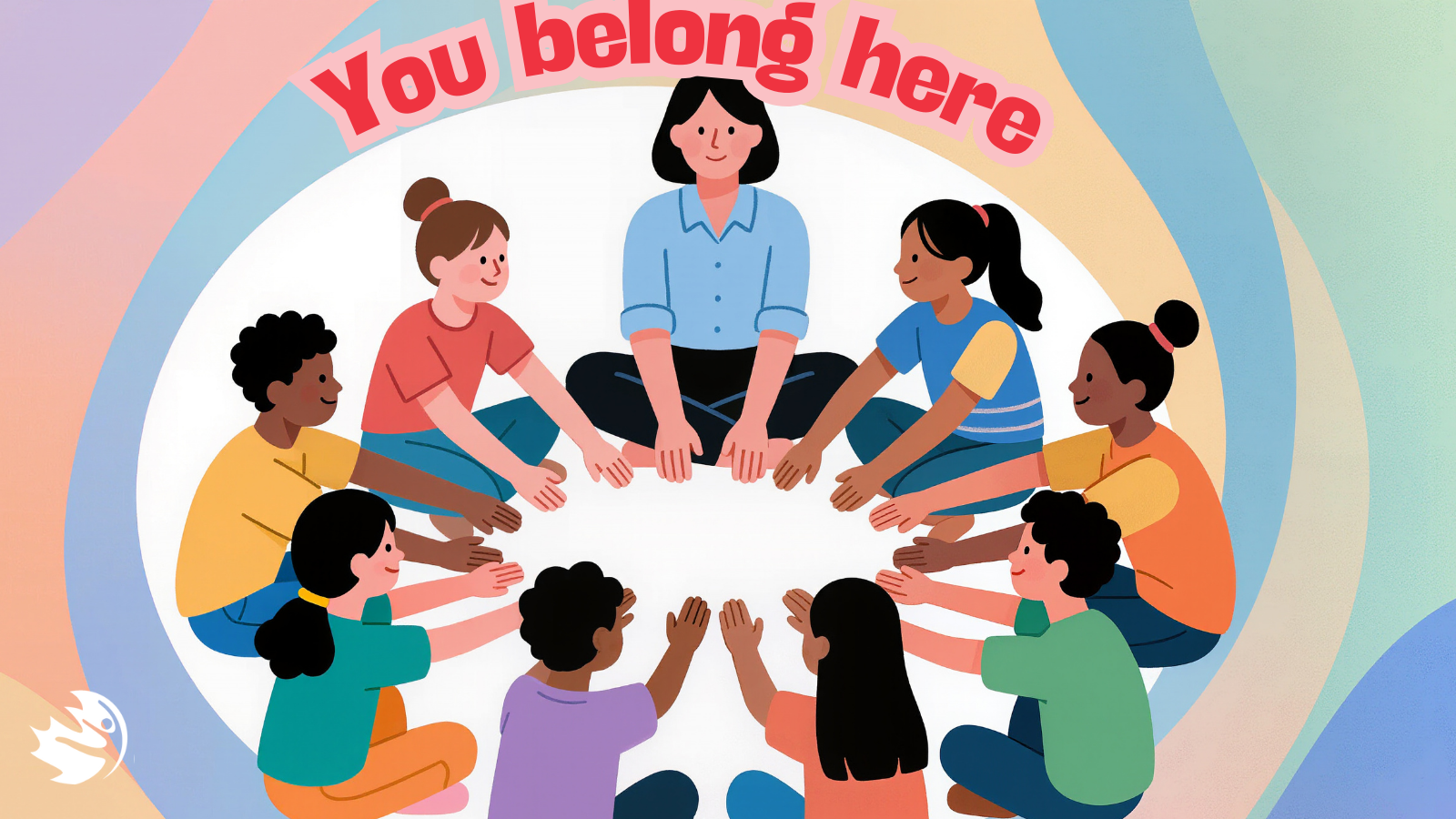
What many students need most is a space that sees them, hears them, and makes room for who they are. These strategies are not a cure-all. But they are a starting point—a way to say: You belong here, just as you are.
And that message, repeated consistently, may be the most powerful thing we ever teach.
Resources
Adult-Facing Tools
Case Study
"Designing for Race Equity: Now Is the Time"
An exploration of how schools can implement equityXdesign principles to address racial disparities.
Articles
Racism and Inequity Are Products of Design. They Can Be Redesigned.
Discusses how systemic inequities are intentionally designed and how they can be reimagined through inclusive design practices.
A New Path Forward: Transforming Schools with equityXdesign
Discusses how schools can adopt equityXdesign principles to reimagine their futures.
Books
Culturally Responsive Teaching and the Brain by Zaretta Hammond
A practical, neuroscience-informed guide to building learning environments that honor identity and empower students.
Culturally Sustaining Pedagogies: Teaching and Learning for Justice in a Changing World (edited by Django Paris & H. Samy Alim)
This collection of essays expands on culturally sustaining pedagogy, emphasizing the importance of maintaining cultural integrity in education.
Decolonizing Education: Nourishing the Learning Spirit by Marie Battiste
Focuses on how colonization has shaped schooling—and how we might reframe it with Indigenous knowledge systems and equity at the center.
Teaching to Transgress by bell hooks
Focuses on education as the practice of freedom, particularly relevant for educators committed to intersectional equity.
Authors