type

  • Feature Article
  • Podcast
  • Research

theme

  • Instant Activity
  • Food Literacy
  • Outdoor Learning
  • Physically Active Learning
  • Social Emotional Learning
  • Cross-Curricular Learning
  • Models-Based Approach
  • PHE Community
  • Healthy School Communities
  • Fundamental Movement Skills
  • Dance Education
  • Digital Literacy
  • Health Education
  • Financial Literacy
  • Physical Education
  • Sex Education
  • Educational Leadership
  • Equity, Diversity and Inclusion
  • Teacher Education
  • Mental Health
  • Substance Use
  • Truth & Reconciliation

Search Results

SORT BY:

Rethink Food Literacy Education with BrightBites
January 28, 2026
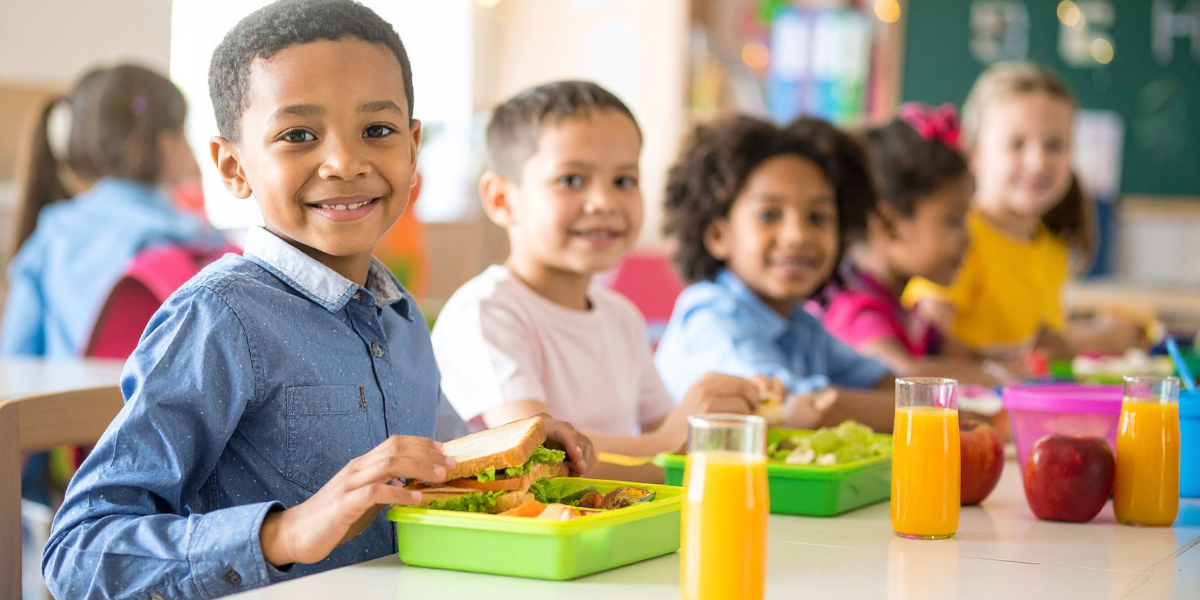
A group of kids enjoying the food in schools.

Ontario Dietitians in Public Health (ODPH) is proud to present our new website - BrightBites - to the PHE Canada community! BrightBites is a website for the school community where you can find evidence-based information and resources that support positive relationships with food and bodies in schools. The website is available in both French and English.  

As adults working in schools - you play an important role in supporting children and youth to develop healthy eating habits and positive body image. This is why ODPH created BrightBites to support teachers and other adult influencers to shift the school food culture and to teach about food and nutrition in a way that fosters food literacy and positive relationships with food and bodies.  
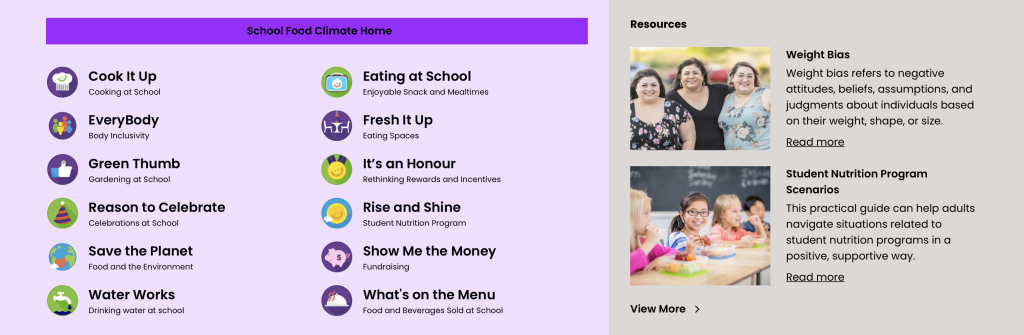
BrightBites website screenshot showing school foot climate

BrightBites has three Guiding Principles to help you support students build a positive relationship with food and their bodies while contributing to a more inclusive school environment. 

Teach and talk about food and eating in a positive way.

Food goes far beyond nutrients. Food can bring people together, enable the sharing of culture and traditions as well as support physical and mental well-being.  

ACTION: Calling foods by their names instead of categorizing them in “healthy vs. unhealthy” categories can encourage students to explore foods with curiosity. Hands-on learning activities where students can see, smell, touch, cook and taste new foods are excellent for this! 

Respect roles and responsibilities related to food and eating.

Trust that families are doing the best they can with the resources they have to care for their children. It is important to recognize that most students do not have control over the food available to them.  

ACTION: Save nutrition education for the classroom, not for mealtimes. Trust students when they say they are full or hungry for more and refrain from making comments on what they eat or on the order in which they choose to eat.  

Promote body inclusivity.

Ensure all body shapes and sizes feel accepted and welcomed. All bodies, regardless of shape or size, deserve respect and equitable treatment. This approach contributes to creating a supportive climate that embraces diversity, helps increase self-esteem, and reduces the risk of discrimination. 

ACTION: Reflect on your own attitudes about body sizes, eating habits and health and challenge messages about body ideals and weight-based stereotypes. Bodies naturally come in all shapes and sizes. Be mindful of what you say and do and aim to be a positive role model by not commenting on your own or other people’s bodies and food choices.  
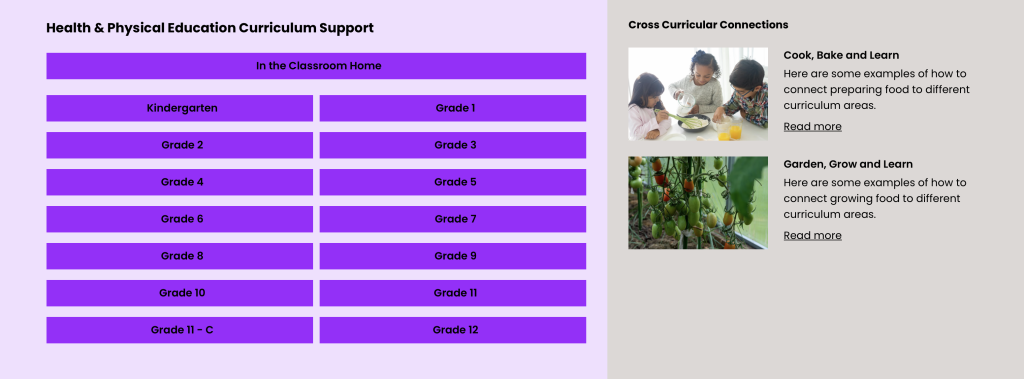
BrightBites website screenshot showing curriculum support for different grade levels

To learn more about how you can support food literacy and positive relationships with food and bodies in your classroom and school: 

  • Explore the “In the Classroom” section of BrightBites for curriculum-linked activities to teach food and nutrition in a supportive manner that will get kids excited about food.  

  • Check out the “School Food Climate” section of the website for information and practical changes  you and others in your school community can make to improve the school food environment and make it easier for students to develop a positive relationship with food and their bodies. Topics include rewards and incentives, fundraising, body inclusivity and enjoyable snack and mealtimes to name a few.  

  • Use the “Resources” section to learn more about topics like “roles and responsibility in relation to food and eating” and explore examples of food-related situations or challenges that might come up in your classroom and how you can respond in a supportive manner.  

Additional Resource:  

Food Literacy – PHE Canada 

Recent Posts

A group of kids enjoying the food in schools.
Rethink Food Literacy Education with BrightBites
[ Feature Article ] Ontario Dietitians in Public Health (ODPH) introduces BrightBites, a bilingual digital platform designed to support educators and school staff in fostering food literacy and body inclusivity within school settings. Anchored by three evidence-based Guiding Principles—positive food discourse, respect for food-related roles, and promotion of body diversity—BrightBites encourages a shift away from traditional “healthy vs. unhealthy” narratives. Through practical actions, curriculum-linked resources, and supportive guidance, the website empowers adults in schools to cultivate environments where students can build positive relationships with food and feel accepted in their bodies.
Authored by: Chantal de Laplante
two students playing with balance board in a school gym.
The Rise of Circus Arts in Physical Education: A Fun, Engaging Way to Enhance Physical Literacy and Physical Activity Experiences
[ Feature Article ] Circus arts instruction delivered in primary physical education can have many benefits to the holistic development of children in the physical, social, psychological, and creative domains. This includes meeting curricular expectations and fulfilling many characteristics of quality physical education, including the development of physical literacy. This article addresses some of the benefits, as well as the issues to address for implementation in your school.
Authored by: JJ Ross, Bryan Vermeylen
A group of children are sitting in a circle with a teacher and talking heart-to-heart.
You Belong Here: Five Strategies for Inclusive Physical and Health Education
[ Feature Article ] This article presents five practical strategies to create inclusive physical and health education (PHE) spaces. Grounded in two of five Equity By Design principles and culturally responsive practice, this article invites educators to reflect on who their PHE spaces are designed for and how small shifts can help students thrive and transform PHE spaces into areas where every student feels seen, valued, and empowered to participate fully.
Authored by: Jacinta Williams
The PHE Canada Podcast, Season 2 Episode 1
The PHE Canada Podcast, Season 2 - Episode 1: Supporting Teacher Well-Being at the University of Lethbridge
[ Podcast ] In the first episode of the second season of the PHE Canada Podcast, host Caleb Poulin sits down with Aaron Stout, Greg Ogilvie, and Dawn Burleigh from the University of Lethbridge to explore how wellness is being woven into the fabric of their teacher education program.
Authored by: Aaron Stout, Greg Ogilvie, Dawn Burleigh
A joyful group of children and adults celebrating their victory after a basketball game, smiling and cheering together.
Reconceptualizing Physical Education to Enhance Student Motivation: Overcoming Teacher, Institutional, & Student Barriers
[ Research ] Abstract The health and well-being of young people continues to be a growing concern for parents and educators across the country. Sedentary behavior and mental health issues are rising steadily in...
Authored by: Dr. David Chorney, Karly Scott
Two youth moving on running track.
Problematizing and Rethinking Elementary Track and Field School Days: Re-envisioning a Future for All
[ Research ] Abstract Elementary track and field days can be an enjoyable way of participating in physical activity outdoors. Unfortunately, these events are not always a positive experience for all students, and...
Authored by: Alexandra Stoddart, Sara Schroeter