type

  • Feature Article
  • Podcast
  • Research

theme

  • Instant Activity
  • Food Literacy
  • Outdoor Learning
  • Physically Active Learning
  • Social Emotional Learning
  • Cross-Curricular Learning
  • Models-Based Approach
  • PHE Community
  • Healthy School Communities
  • Fundamental Movement Skills
  • Dance Education
  • Digital Literacy
  • Health Education
  • Financial Literacy
  • Physical Education
  • Sex Education
  • Educational Leadership
  • Equity, Diversity and Inclusion
  • Teacher Education
  • Mental Health
  • Substance Use
  • Truth & Reconciliation

Search Results

SORT BY:

Pins and Bottles: Fun, Budget-Friendly Ideas for Target Games!
February 25, 2026
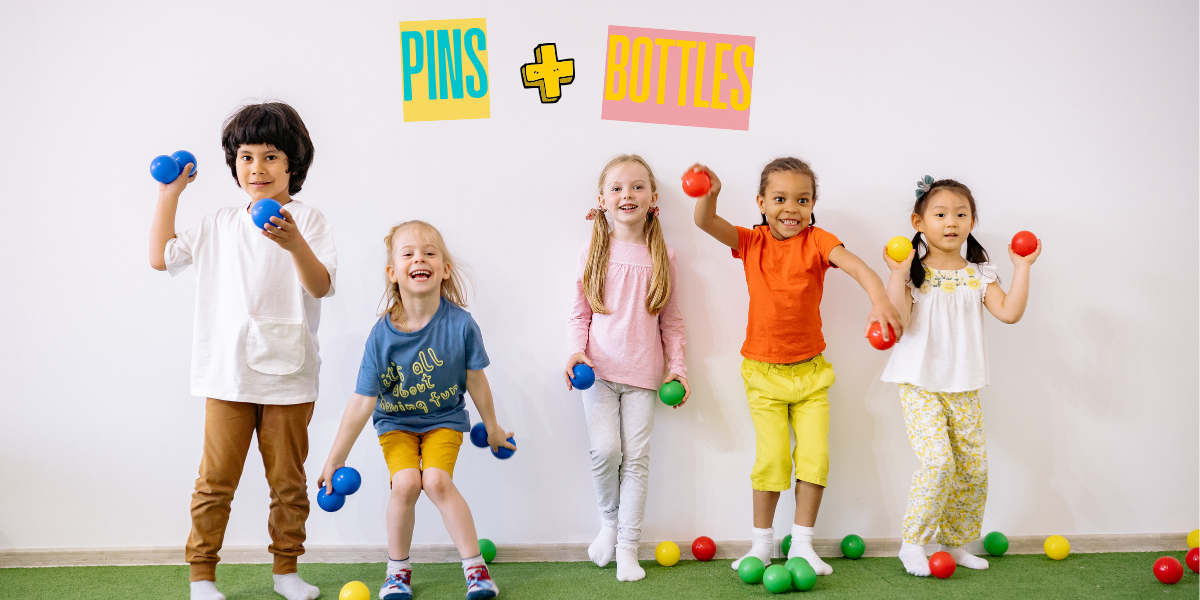
A group of kids are standing against a white wall, smiling and holding colorful balls ready to throw.

Bowling pins, thin pins, and numbered pins are fantastic tools for target games—but you do not need anything fancy to get started. Empty water or soda bottles make a fun, budget-friendly alternative. Throughout this post, I will refer to them all as “pins,” but remember that bottles work just as well. For added flair and scoring variety, try filling bottles with water and a splash of food coloring. 

Small Team Game

Spin the Pin Tag


This energetic game is great for three players. Place a hula hoop on the ground with a pin (or bottle) lying flat in the center. All three players stand around the hoop. One player spins the pin, and whoever it points to becomes the tagger. The tagger then chases the others until someone is tagged. Everyone returns to the hoop, and the tagged player spins to start the next round. 

Team Surrounded Pin Knockdown

Set a pin upright in the center of a hula hoop. Three defensive players surround the hoop, guarding the pin. Around them, set up a wider circle using poly spots (brightly coloured markers) or cones, where three offensive players stand. The offense passes a ball around, looking for an opening to knock down the pin, while the defense blocks. Switch roles after each knockdown or play for a set time and count how many pins each team knocks down. 

Seven Degree

A popular outdoor game from India, this challenge starts with three pins set up and a throwing line about five to ten paces away (depending on skill level). A player throws a ball at the pins. If missed and a defender behind the pins catches the ball on one bounce, it counts as a strike. Three strikes and that player is out. When a pin is knocked over, the throwing team races to reset all three pins before being hit by a thrown ball. A successful setup equals one run. Players cannot move with the ball but may pivot.

Molky

In this individual game, players race to be the first to score exactly 50 points. Start by numbering the pins and placing them in a cluster. Each player throws a designated pin from a line about four paces away. Score the number of pins knocked over, or the number on the single pin if only one falls. Stand the pins back up where they landed. A player who misses three times in a row is out. Overshooting 50 points drops the score to 25. 

Large Team Games
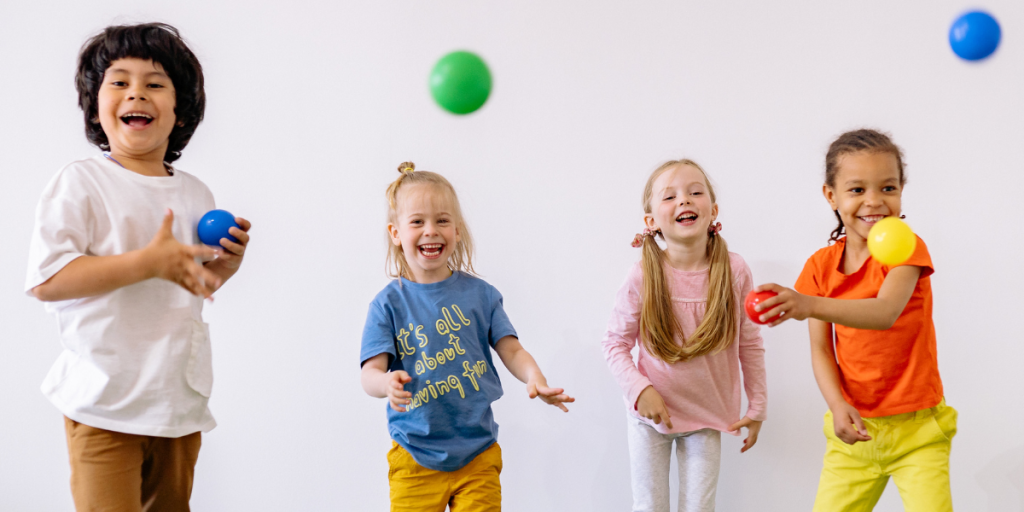
Kids throw colorful balls forward and feel happy.

Pin Knockdown 

Teams line up behind an end line on opposite sides of a playing area. Place pins in front of each team. Players roll balls to try to knock down the opposing team's pins, staying behind the center line. After a set time, the team with the most pins knocked down wins. 

Pin Knockdown Safe or Dare

This variation allows players to cross the center line, but with a twist—if they are hit by a ball while on the opponent’s side, they are “eliminated.” Eliminated players can retrieve balls for teammates but may not throw or tag others. 

Pin Ringers

Place a pin at the center of each team's basketball key. Teams try to toss a ring over their pin more times than their opponent. Players cannot run or walk with the ring; it must be passed. If it drops, the first player to place a foot inside the ring can pick it up and continue. 

Pin Knockdown in Crease (Ball or Disc) 

Similar to Pin Ringers, but instead of a ring, players use a ball or disc. The goal is to knock down your team’s pin in the opponent’s crease. 

Games with a Net

Pin Knockdown Over Net

Using a volleyball or badminton net, scatter pins around each team’s side of the court. Players toss balls over the net, aiming to knock down the other team’s pins. 

Pin Knockdown Under Net

This variation requires players to roll balls under the net to hit opposing pins while protecting their own. 

Pins or bottles offer great focus for a wide variety of target games. For something a bit different, check out Stryke`N pins—six-sided, numbered like dice, and designed to score the number facing up when knocked over. 


Looking for more ideas?

Explore over 60 target games at CanadaGo4Sport, and check out high-quality pin options, including Stryke`N and others, through Gopher Sport. 

Recent Posts

A group of kids are standing against a white wall, smiling and holding colorful balls ready to throw.
Pins and Bottles: Fun, Budget-Friendly Ideas for Target Games!
[ Feature Article ] Bowling pins, thin pins, and numbered pins are fantastic tools for target games—but you do not need anything fancy to get started. Empty water or soda bottles make a fun, budget-friendly alternative. Throughout this post, I will refer to them all as “pins,” but remember that bottles work just as well. For added flair and scoring variety, try filling bottles with water and a splash of food coloring.
Authored by: Dr. John Byl
An abstract line drawing showing two profiles of heads with pink brains inside. The heads are facing in opposite directions, one left and one right. The background shows a colourful ripple effect.
How I Tried to Gamify Physical Education
[ Feature Article ] After leaving teaching in 2017, I took on several long-term occasional (LTO) placements. More often than not, I was assigned a timetable that had several Grade 9 classes. During my years as a teacher...
Authored by: Rob Pacas
A group of kids enjoying the food in schools.
Rethink Food Literacy Education with BrightBites
[ Feature Article ] Ontario Dietitians in Public Health (ODPH) introduces BrightBites, a bilingual digital platform designed to support educators and school staff in fostering food literacy and body inclusivity within school settings. Anchored by three evidence-based Guiding Principles—positive food discourse, respect for food-related roles, and promotion of body diversity—BrightBites encourages a shift away from traditional “healthy vs. unhealthy” narratives. Through practical actions, curriculum-linked resources, and supportive guidance, the website empowers adults in schools to cultivate environments where students can build positive relationships with food and feel accepted in their bodies.
Authored by: Chantal de Laplante
two students playing with balance board in a school gym.
The Rise of Circus Arts in Physical Education: A Fun, Engaging Way to Enhance Physical Literacy and Physical Activity Experiences
[ Feature Article ] Circus arts instruction delivered in primary physical education can have many benefits to the holistic development of children in the physical, social, psychological, and creative domains. This includes meeting curricular expectations and fulfilling many characteristics of quality physical education, including the development of physical literacy. This article addresses some of the benefits, as well as the issues to address for implementation in your school.
Authored by: JJ Ross, Bryan Vermeylen
A group of children are sitting in a circle with a teacher and talking heart-to-heart.
You Belong Here: Five Strategies for Inclusive Physical and Health Education
[ Feature Article ] This article presents five practical strategies to create inclusive physical and health education (PHE) spaces. Grounded in two of five Equity By Design principles and culturally responsive practice, this article invites educators to reflect on who their PHE spaces are designed for and how small shifts can help students thrive and transform PHE spaces into areas where every student feels seen, valued, and empowered to participate fully.
Authored by: Jacinta Williams
The PHE Canada Podcast, Season 2 Episode 1
The PHE Canada Podcast, Season 2 - Episode 1: Supporting Teacher Well-Being at the University of Lethbridge
[ Podcast ] In the first episode of the second season of the PHE Canada Podcast, host Caleb Poulin sits down with Aaron Stout, Greg Ogilvie, and Dawn Burleigh from the University of Lethbridge to explore how wellness is being woven into the fabric of their teacher education program.
Authored by: Aaron Stout, Greg Ogilvie, Dawn Burleigh