The Rise of Circus Arts in Physical Education: A Fun, Engaging Way to Enhance Physical Literacy and Physical Activity Experiences
Incorporating circus arts into your Physical Education (PE) program can bring an exciting and unique twist to traditional sports, fitness, and physical activities. This innovative approach has gained traction in the St. James-Assiniboia School Division of Winnipeg, Manitoba, where over a dozen schools have adopted circus arts programs. These programs extend beyond basic juggling, offering comprehensive training in various disciplines derived from the five major circus families: acrobatics, aerials, manipulation (often called juggling), equilibrium (balancing), and clowning.
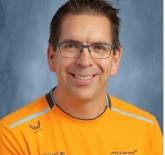
Bryan Vermeylen’s venture into circus education began a decade ago when he participated in a groundbreaking research study at the Human Potential Research Centre in Montreal. This study explored the impact of circus education in Canadian public schools. His transformative visit to Montreal’s renowned École nationale de cirque deepened his understanding of circus disciplines, movement, and the resilience and athleticism of circus performers. This rich background informs his approach to implementing circus arts in schools, demonstrating the profound impact that this educational framework can have on students.
As a result of these initiatives, the St. James-Assiniboia School Division has become a leading hub for circus arts instruction (CAI) within public school physical education, attracting educators from around the world. Whether you’re new to circus skills or looking for a creative addition to enhance movement exploration in your PE delivery, this article will provide practical tips on starting a circus arts program, building a low-cost equipment toolkit, and actionable ideas and strategies to create an engaging, inclusive, high-participation, and fun learning environment through circus arts.
Why Introduce Circus Arts Instruction in PE?
Integrating CAI into PE offers a dynamic and inclusive approach that addresses gaps in traditional PE programs effectively. Traditional PE often emphasizes competitive sports, which can alienate students who do not thrive in that environment. In contrast, CAI provides a non-competitive alternative that fosters engagement for all students, increasing participation and boosting motivation. By encouraging students to explore various forms of movement, creativity, and self-expression, CAI caters to a broader range of interests and abilities while facilitating skill development and enhancing physical literacy skills.
Dr. Dean Kriellaars, Scientific Director at the Human Potential Research Centre in Montreal, is deeply interested in the mental and physical challenges posed by circus arts. Through his advocacy for integrating these programs into the school division, he highlights that circus arts enhance creativity and physical literacy while fostering an inclusive environment that dismantles traditional biases regarding physical abilities. “Our findings show that circus significantly boosts creativity in children compared to conventional sports techniques,” he stated. In 2019, Dr. Kriellaars published an article illustrating the benefits of circus arts instruction (CAI) in PE, demonstrating its positive impact on foundational movement skills, confidence, motivation, and nearly eliminating the gender gap often seen in traditional physical education settings.
The benefits of CAI are extensive, encompassing physical, mental, social, and creative aspects. CAI creates an engaging learning environment that helps students build confidence and develop teamwork and collaboration skills. By incorporating CAI into PE programs, educators can significantly enhance the overall student experience, promoting a lifelong appreciation for movement and creativity.
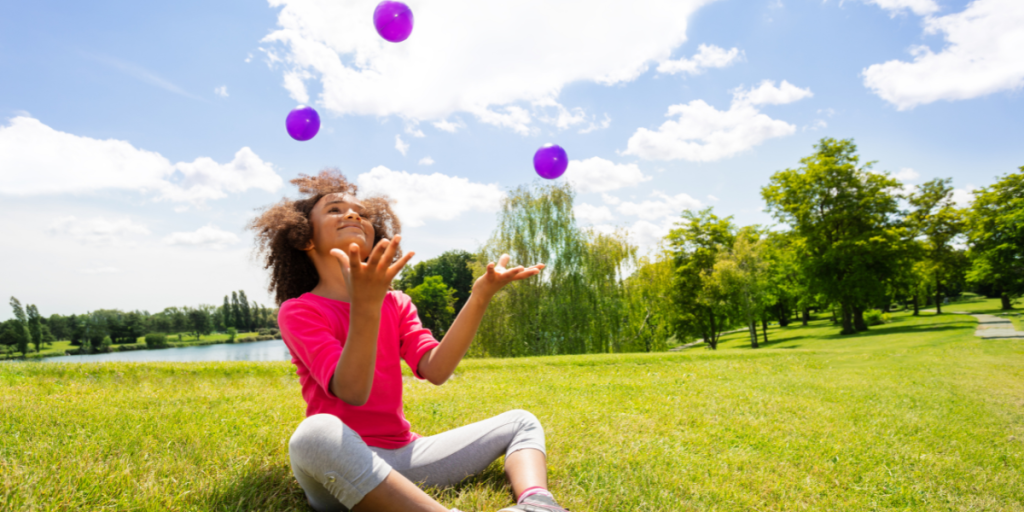
What Do Circus Arts Entail?
PE educators like Bryan Vermeylen at École Robert Browning deliver specialized curricula while prioritizing student safety. He emphasizes the importance of inclusive practices and utilizes specialized circus equipment to encourage students to explore their physical abilities. A typical circus arts instruction (CAI) program includes aerial elements such as hoops, cubes, trapezes, and silks, along with ground-based tools like pogo sticks, stilts, unicycles, flower sticks, and juggling pins.
Integrating circus activities into the curriculum effectively aligns with various educational goals, particularly in motor skill development, including balance, body control, object manipulation, and enhancement of locomotor and transport skills. The foundation of circus arts is rooted in cooperative learning, allowing every student to find their unique movement, which naturally develops social-emotional skills and fosters empathy. There is always something for everyone in circus arts. The various activities cater to diverse interests; it’s not solely about juggling three balls but rather how each student wants to juggle—be it two balls while balancing on a rola bola, for example. Ultimately, circus arts emphasize student and group problem-solving and decision-making, fostering creativity and innovation.
As students master circus skills, they step out of their comfort zones in a safe environment and celebrate their achievements—no matter how small—reinforcing their belief in their abilities. Circus arts is very good at coupling the development of competence with confidence, making it an ideal fit for enhancing student’s physical literacy. This positive reinforcement encourages a love for physical activity and instils the understanding that hard work leads to success. Through a structured yet flexible approach, students learn to tackle challenging tasks, fostering a lifelong appreciation for physical activity and personal growth.
Addressing Safety Concerns in CAI
While the circus program has flourished within the St. James-Assiniboia School Division, Kriellaars pointed out that concerns about applying excessive safety measures have hindered the implementation of similar initiatives in provinces like Alberta and British Columbia. Critics often voice apprehensions regarding safety; however, many advocates argue that circus arts are statistically safer than many traditional sports, which typically result in injuries such as sprains and concussions. Instead of applying unnecessary restrictions that could limit participation, it is essential to focus on implementing surplus safety measures that provide adequate protection without compromising engagement, creativity, or learning experiences. The school division utilizes the Manitoba Physical Activity Safety in Schools (MPASS) documents to support PE educators with safety protocols and guidelines, particularly concerning aerial activities in circus arts.
Getting Started: The Basics of Circus Skills
Introducing circus arts skills offers an opportunity to embrace empathy, cooperative learning, risk-taking, and creativity for both students and PE educators. By starting small and focusing on student choice, initiating a circus arts program does not require expertise. PE educators can learn alongside their students, modelling how to take risks, find the right challenges, be creative with movements, and respect all abilities. This approach fosters a supportive learning environment, creates safer spaces for positive social interactions, and inspires students with varying levels of difficulty.
Begin by introducing a few simple circus arts disciplines that require minimal equipment, can be scaled for different skill levels, and encourage movement exploration. Some excellent starting points include:
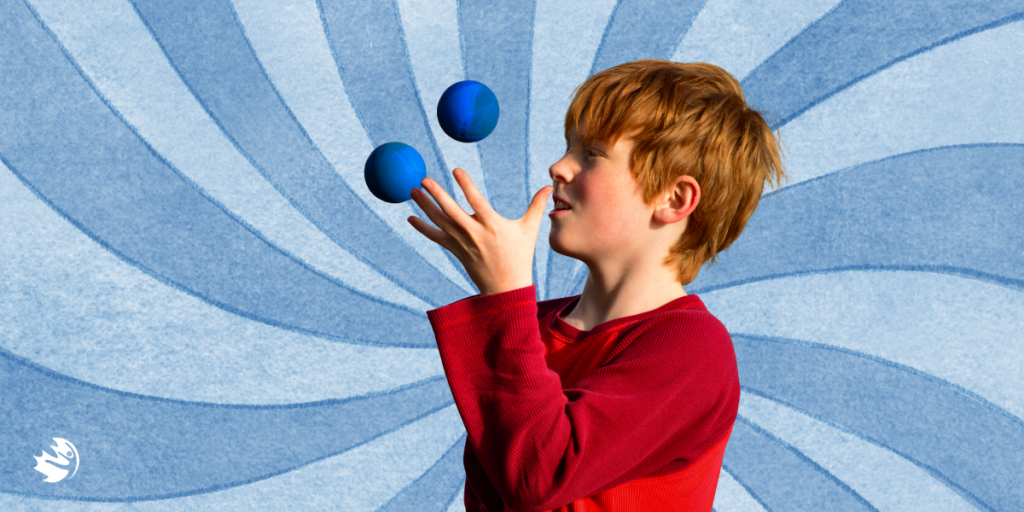
- Juggling: Using scarves, beanbags, or juggling balls helps students develop hand-eye coordination and concentration.
- Plate Spinning: A fun, non-intimidating activity that improves focus and balance.
- Flower Sticks and Poi: These introduce object manipulation skills that can be practiced individually or in pairs. While diabolo is typically not a starting point, it can be introduced later.
-
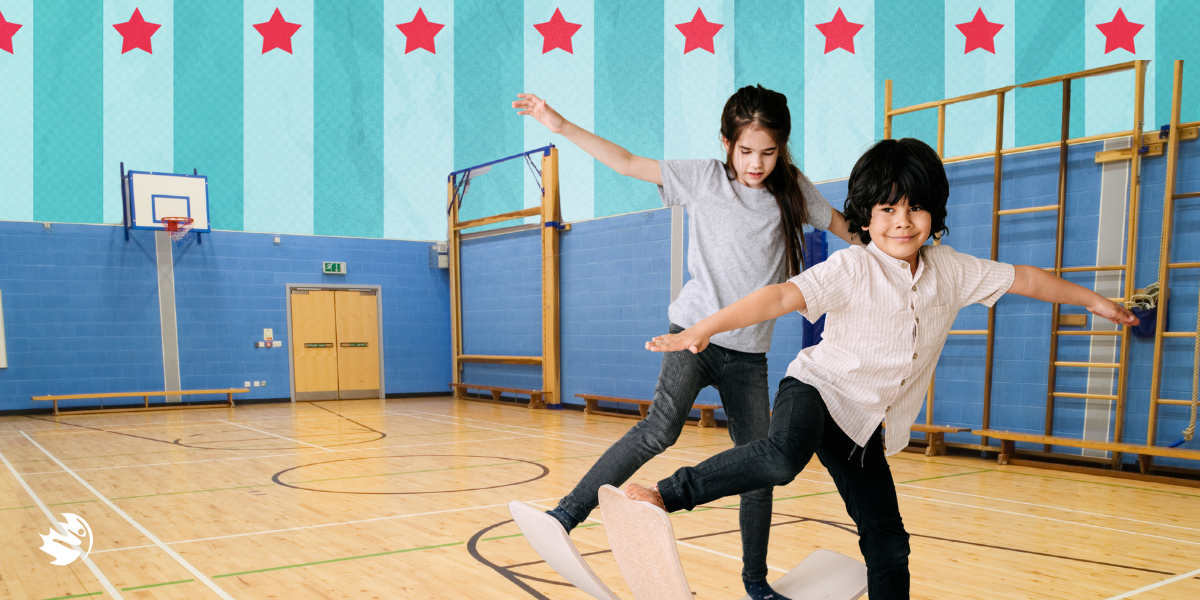
Balance Activities: Start with rolla bolla, physitubes, or perhaps a slackline before progressing to more challenging balance equipment.
-
Acrobatics and Tumbling: Safe tumbling exercises like forward rolls, cartwheels, and simple partner balances introduce students to acrobatic movement safely. More advanced tumbling could include dive rolls and rolling/jumping through or over shapes.
-
Pyramid Building and Hand-to-Hand Positions: These are also significant components of circus instruction. Pyramid building involves creating human structures, often referred to as "human pyramids," where individuals work together to form stable formations. These pyramids typically include multiple layers of participants, with the base providing support to those above them. Hand-to-hand positions are acrobatic stunts where one performer supports another by holding hands, often while one person balances on the other’s hands or shoulders. The focus for both is on acrobatic skills, balance, teamwork, and strength. These disciplines promote cooperation, trust, and physical coordination while enhancing students' overall physical literacy.
Create an initial session that introduces key skills and safety protocols. Next, arrange the learning space into stations, each equipped with necessary tools, posters, and laptops playing looped videos of various tricks designed to inspire students at different skill levels. Students can seize this opportunity to create performances individually, with partners, in small groups, or as a class. This approach encourages exploration and provides foundational guidance while ultimately allowing students to take charge by experimenting, pushing their limits, and being inventive with their movements.
Building Your Circus Arts Toolkit
Launching a circus arts program typically requires an investment ranging from $5,000 to $15,000 for necessary training and equipment. Many educators and administrators believe this cost is justified, given the extensive benefits these programs offer, including improved physical fitness, enhanced creativity, and increased inclusivity.
A practical starting point for educators is to implement a small pilot program that focuses on a few key circus skills, such as juggling or balancing. This approach allows for manageable implementation and evaluation of student engagement. Additionally, consider seeking novel equipment by asking families at your school to donate items.
If you wish to expand your circus arts instruction (CAI) program, the next steps should include finding funding or grants, providing essential teacher training, and implementing circus arts programs in a manageable manner. Beyond traditional school board funding, other avenues for support include:
- Exploring Funding Opportunities: Look into PHE Canada’s funding options, check with your provincial or territorial PHE associations, and research local, city, or provincial grants (e.g., the Winnipeg Foundation in Winnipeg).
- Collaborating with Local Circus Performers or Organizations: Partner with local performers to provide workshops or demonstrations, enriching the program without heavy initial investment.
- Organizing Community Events: Host talent shows, fun runs, or workshops where proceeds go towards funding circus arts programs. Involving students and their families in these efforts can foster community support and engagement.
By taking these steps, educators can effectively build their circus arts toolkit and create a vibrant circus arts program that benefits students and the wider community.
The Future of Circus Arts in PE
As interest in circus arts education continues to rise, it is clear that the St. James-Assiniboia School Division is leading the charge in redefining physical education and inspiring the next generation of students. By integrating circus arts into PE, educators are not only enhancing physical literacy but also fostering creativity, teamwork, and confidence among students.
To truly embrace this innovative approach, we encourage PE educators to explore available resources and attend circus arts workshops. Gaining firsthand experience with these dynamic skills will empower PE educators to effectively implement circus arts in their own programs, ultimately enriching the educational experience for their students. Join the movement to bring circus arts to your school and help shape a more inclusive and engaging future for physical education!
Acknowledgments
We wish to acknowledge the contributions of Dean Kriellaars for providing a review of this document.
Additional/Recommended Resources
National circus school training programs (16 week e-learning program with one week in-person training)
Background research
Inclusion and circus
C Bortoleto, M. A., Ross, J. J., Houser, N., & Kriellaars, D. (2022). Everyone is welcome under the big top: a multiple case study on circus arts instruction in physical education. Physical Education and Sport Pedagogy, 30(1), 1–12. https://doi.org/10.1080/17408989.2022.2153820
Circus arts instruction in primary school benefits.
DJ Kriellaars, J Cairney, MAC Bortoleto, TKM Kiez, D Dudley, P Aubertin (2019). The impact of circus arts instruction in physical education on the physical literacy of children in grades 4 and 5. Journal of Teaching in Physical Education 38 (2), 162-170. https://doi.org/10.1123/jtpe.2018-0269
Physical literacy enriched pedagogy and PE supported by circus
N Houser, D Kriellaars (2023). “Where was this when I was in Physical Education?” Physical literacy enriched pedagogy in a quality physical education context. Frontiers in Sports and Active Living 5, https://doi.org/10.3389/fspor.2023.1185680
A physical literacy-based framework for holistic development of children
Agans, J. P., Stuckey, M. I., Cairney, J., & Kriellaars, D. (2024). Four domains for development for all (4D4D4All): A holistic, physical literacy framework. Journal of Applied Sport Psychology, 36(6), 880–901. https://doi.org/10.1080/10413200.2024.2342323
Authors