Big Dreams, Small Budget: Getting Started with Circus Arts
The Benefits of Circus Arts
Circus Arts offers an exciting and dynamic way for students to develop a wide range of skills. The benefits are immense, including increased self-confidence, enhanced self-esteem, improved resilience, and a boost in creativity. Additionally, Circus Arts helps students strengthen their bodies, improve coordination, and develop balance (Circus Moves, 2021; Showtime Circus, 2024; Social Circus Foundation, 2022; Vancouver Circus School, n.d.). This unique program provides a platform for every student to explore and refine their own artistic movements at their own pace. By fostering an environment of choice and differentiation, Circus Arts ensures that all students can experience success, regardless of their starting point. The discipline’s diverse nature, with its many points of entry, allows every student to see themselves as capable and empowered. Ultimately, Circus Arts encourages students to discover their own form of expression and inspires them to find their artistic voice in a physically engaging art form.
Getting Started on a Budget
Starting a Circus Arts program may initially seem overwhelming, especially when considering the cost of equipment and where to begin. However, the good news is that you do not need a massive budget or an extensive collection of equipment to get started. Many common gym items, such as hula hoops, ribbons, pogo balls, scarves, gym benches, and mats, can easily be incorporated into your Circus Arts curriculum. Unlike traditional sports, which often require large quantities of identical equipment, Circus Arts enables cost-effective participation by allowing the purchase of limited quantities of each item. This approach gives students a variety of options to explore, reducing costs and providing more flexibility. Students can choose the equipment they would like to practice with, which not only keeps costs low but also makes the learning experience more adaptable to their needs.
Using Station-Based Learning for Cost Efficiency
Circus Arts can be divided into four main categories: balance, juggling, spinning/twirling, and acrobatics. The four main categories can be explored using station-based learning. Station-based learning is also ideal for practicing Circus Arts on a budget because it uses a smaller amount of equipment. It also prevents overcrowding at any one station allows students to concentrate on their skills in smaller, more manageable groups. Offering a minimum of three to four circus equipment options per a category, provides students the opportunity to explore and develop their skills while still allowing them to choose the equipment they prefer.
1. Balance: Strengthening Coordination and Stability
In the balance category, students develop coordination, strength, and balance. Items such as stilts, rola bolas, pogo balls, pogo sticks, Spooner boards, feathers, Bosu balls, or other gym equipment can be used to enhance their skills. A simple gym bench turned upside down can even double as a balance beam. Feathers can be used to balance on different body parts. If feathers are not available, pool noodles can be substituted to practice balancing on different body parts. These tools help students improve stability, body awareness, and control.
2. Juggling: Building Coordination and Focus
For the juggling category, the station can incorporate scarves, juggling balls, diabolos, flower sticks, hacky sacks, and cup-and-scoop sets. On a tight budget? Juggling and hacky sack balls can easily be made by filling balloons with rice or beans, creating lightweight, functional props that are perfect for beginners.
3. Spinning and Twirling: Developing Rhythm and Timing
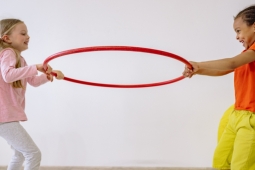
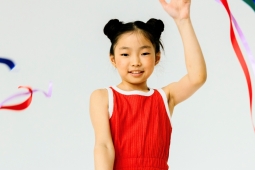
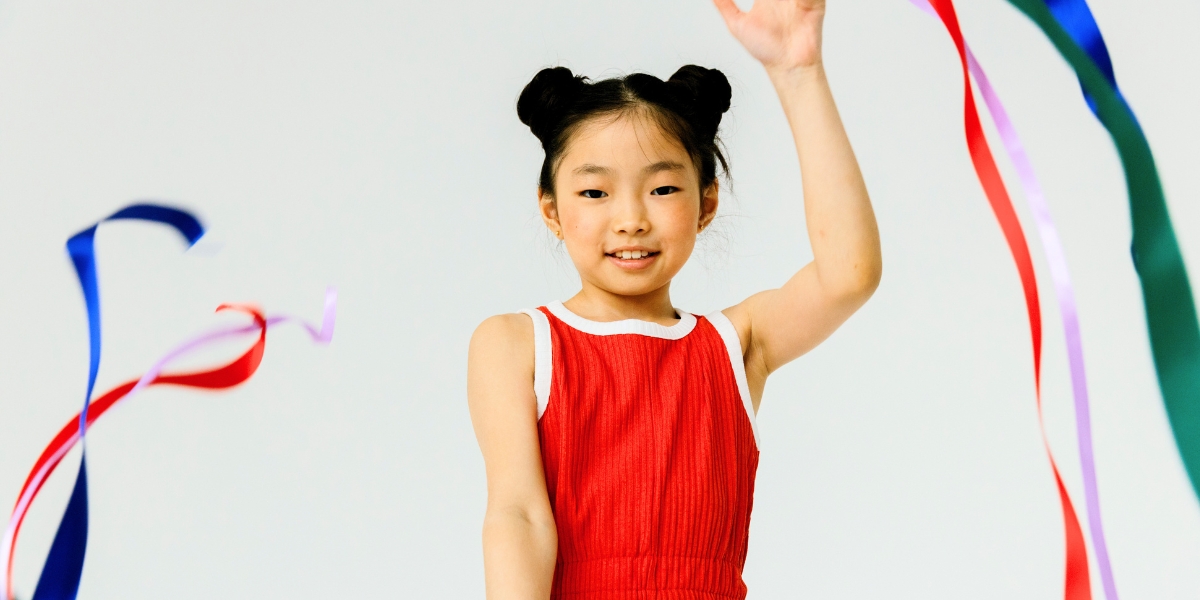
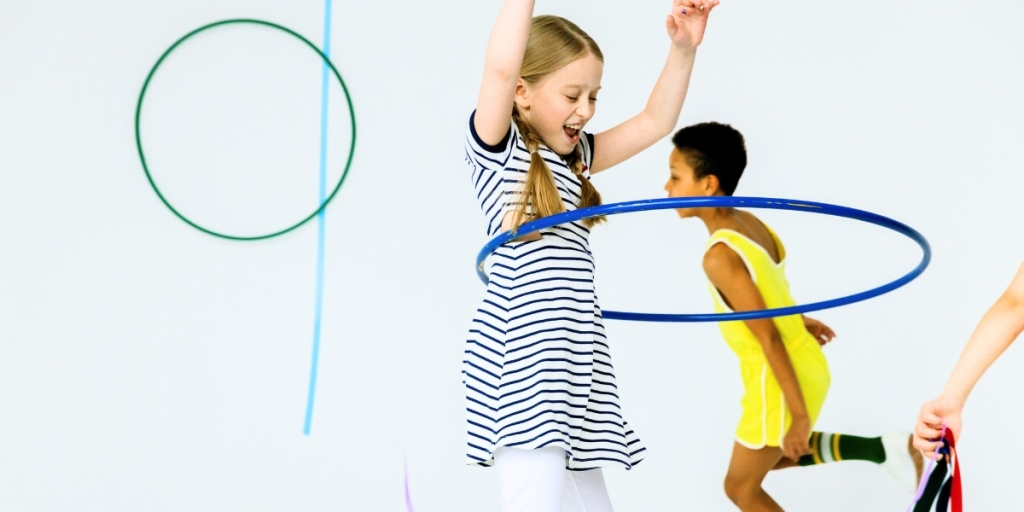
In the spin and twirl category, hula hoops, ribbons, spinning plates, yo-yos, and poi can teach students the art of controlled movement and rhythm. These activities are not only fun, but they also help build coordination, timing, and creativity.
4. Acrobatics: Strengthening Body Awareness and Control
For acrobatics, students will practice rolls, supports, and rotations on mats. Partner balances and pyramid-building exercises can also be incorporated into the acrobatic section. Regular gym mats are sufficient for this section, though additional equipment, such as climbing structures, vaulting boxes, pie-shaped mats, or donut mats, can support the program if already available.
Growing the Program Over Time
The beauty of a Circus Arts unit is that you can grow your equipment inventory over time, gradually building your collection as the program evolves. This makes it easier to create a Circus Arts curriculum on a budget while still providing students with fresh and engaging experiences each year. Additionally, students will look forward to seeing which new pieces of equipment might be introduced in the coming years, keeping their curiosity and excitement alive as they progress in their circus arts journey, all while staying within budget.
Encouraging Creativity and Ownership
Once students become familiar with the equipment, they are encouraged to combine different skills in creative ways. For example, they might walk along a balance beam while performing flower stick tricks or jump on a pogo ball while spinning a hula hoop—just to name a few possibilities. The combinations are endless, and this is where students’ creativity truly begins to shine as they develop their own personalized tricks.
Showcasing Skills and Building Confidence
Encouraging students to showcase their skills and perform in front of their peers is a key part of the process. Throughout, students will have multiple opportunities to demonstrate their abilities, helping to build self-confidence, self-esteem, and pride in their Circus Arts achievements. Additionally, creating a lunchtime circus club offers students another chance to practice and refine their skills in a more relaxed, supportive setting. After some practice sessions, a whole-school celebration assembly can take place where students can proudly demonstrate all their hard work and successes. This not only reinforces their learning but also fosters a sense of community and accomplishment.
Conclusion: The Value of Circus Arts
In conclusion, Circus Arts provides students with an engaging and dynamic opportunity to develop a diverse set of skills without requiring a significant budget. Beyond improving physical coordination, balance, and resilience, it also fosters creativity, self-confidence, and self-esteem. The flexible nature of Circus Arts often aligns with the criteria for grants offered at the divisional or provincial level, which can provide additional funds to purchase more circus equipment. By creating a learning environment that emphasizes choice and differentiation, Circus Arts ensures that all students, regardless of their starting point, can experience success. The inclusive nature of this program allows students to see themselves as capable and empowered, while also encouraging them to discover and improve their individual artistic voice through a physically engaging and fun art form—all without the need for extensive and expensive equipment.
References
Circus Moves. (2021). Why Circus? Circus Moves. https://www.circusmoves.com/benefits-of-circus-programs
Showtime Circus. (2024). Circus Skills and their benefits. Showtime Circus. https://www.showtimecircus.co.uk/benefits
Social Circus Foundation. (2022). Why circus works. Social Circus Foundation. https://socialcircusfoundation.org/why-circus/
Vancouver Circus School. (n.d.). Why Circus Works. Vancouver Circus School. https://vancouvercircusschool.ca/about-us/why-circus-works/
Authors