type

  • Feature Article
  • Podcast
  • Research

theme

  • Instant Activity
  • Food Literacy
  • Outdoor Learning
  • Physically Active Learning
  • Social Emotional Learning
  • Cross-Curricular Learning
  • Models-Based Approach
  • PHE Community
  • Healthy School Communities
  • Fundamental Movement Skills
  • Dance Education
  • Digital Literacy
  • Health Education
  • Financial Literacy
  • Physical Education
  • Sex Education
  • Educational Leadership
  • Equity, Diversity and Inclusion
  • Teacher Education
  • Mental Health
  • Substance Use
  • Truth & Reconciliation

Search Results

SORT BY:

When Research Drives Action: The University of Moncton Uses PHE Canada’s Advocacy Report to Strengthen Its Physical Education Program

June 8, 2026
1. Un groupe d'étudiants marchant ensemble sur la rue, discutant et riant joyeusement.

One of PHE Canada’s core objectives is to ensure that the voice of physical and health education is heard across the country. Whether through raising awareness among decision-makers, supporting postsecondary institutions, or promoting evidence-based policies, our work is ultimately focused on creating meaningful change. Today, we are pleased to see that goal being put into action.

Evidence has the power to influence the decisions that shape the future of physical and health education. A recent example comes from the University of Moncton, which drew on PHE Canada’s Erosion of Physical and Health Education in Canada advocacy report to support a review of the admission requirements for its Physical Education program.

As part of a proposal presented to university decision-making bodies, the program team used findings from the report to highlight the challenges facing physical education teacher preparation in Canada. The report points to a decline in the number of specialized physical and health education teacher education programs, a shrinking pool of specialists, and the potential impact these trends may have on the quality of education provided to young people. These findings helped inform discussions aimed at ensuring the quality, relevance, and long-term sustainability of the University of Moncton’s program.

Beyond this specific initiative, the process demonstrates the importance of having credible data and practical tools to support the advancement of physical and health education within educational institutions. When research findings and advocacy efforts are integrated into decision-making processes, they can help move important conversations forward and support meaningful change.

For PHE Canada, this is an encouraging example of the impact that resources developed for the physical and health education community can have. We congratulate the University of Moncton for its leadership and commitment to preparing future educators. This initiative serves as a reminder that advocacy, when grounded in evidence and guided by a shared vision, can be a powerful catalyst for change.

Recent Posts

PHE Podcast S2E2 cover
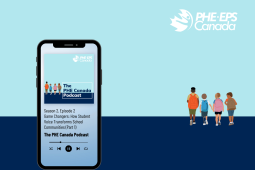
Game Changers: How Student Voice Transforms School Communities, Part 1 (The PHE Canada Podcast, S2E2)
[ Podcast ] Welcome to the PHE Canada Podcast! This is the first episode in a two-part series about PHE Canada's Game Changers program. In this first episode, host Caleb Poulin is joined by Sherra Rogers, physical education teacher and Master of Education student at St. Francis Xavier University, along with PHE Canada’s Programs and Resources Lead, Kelsey Fahie, to discuss the research side of the Game Changers project. They explore how the program was studied, what the research process looked like and the key findings that emerged from the participating schools.
Authored by: PHE Canada, Sherra Rogers
1. Un groupe d'étudiants marchant ensemble sur la rue, discutant et riant joyeusement.
When Research Drives Action: The University of Moncton Uses PHE Canada’s Advocacy Report to Strengthen Its Physical Education Program
[ Feature Article ] The University of Moncton drew on PHE Canada’s Erosion of Physical and Health Education in Canada advocacy report to support a review of the admission requirements for its Physical Education program. This initiative demonstrates how evidence-informed advocacy can help strengthen the preparation of future educators and support the long-term sustainability of quality physical and health education across Canada.
Authored by: PHE Canada
Paper cutouts of diverse people, including some in wheelchairs, holding hands, surrounded by colored pencils. Wooden letter blocks spell out 'INCLUSION'.
How Do I Include Everyone?
[ Feature Article ] Fostering equity, inclusion and belonging in physical education can be challenging, but it is essential for students to feel seen, understood, and supported when they are developing physical literacy. This article shares practical, adaptable strategies that promote inclusive practices—such as flexible dress codes, culturally responsive practices, student voice in planning, and accessible leadership opportunities. It emphasizes creating safe, welcoming spaces through community partnerships, Indigenous perspectives, inclusive language, and visual representation. While not a one-size-fits-all guide, these ideas offer a starting point for creating more welcoming and equitable PE environments that reflect and respect the diversity of our school communities and lived experiences.
Authored by: Brenda Carbery-Tang
Group photo of the Student Chapter Showcase
Building Connection, Leadership, & Belonging: The Student Experience at the 2026 PHE National Conference
[ Feature Article ] This year’s Physical and Health Education National Conference in Vancouver marked an exciting step forward for enhancing the student experience and strengthening connections among the next generation of PHE leaders. Through intentionally designed networking opportunities, active experiences, mentorship moments, and student-led initiatives, the conference created meaningful spaces for pre-service educators to build relationships and deepen their sense of belonging within the profession.
Authored by: Caleb Poulin, PHE Canada
A group of three school-age children can be seen walking together outside a school. They appear happy and are clearly enjoying each other's company.
HEx Prescribing Health Education in Canada: Moving from Insight to Action - A PHE Canada Thinkers Report
[ Feature Article ] We invite you to read this document and join us in advocating for the 25 recommendations and championing the actions that will guide us towards achieving meaningful and sustainable solutions within our school communities.
Authored by: PHE Canada
A teenage boy is sitting on the floor with a schoolbag next to him. He is holding a phone and looking at it intently.
Digital Media and Navigating Smartphone Use in Schools
[ Feature Article ] Digital innovation in education is here, and it is transforming how, what and where we learn. We are witnessing a surge in artificial intelligence, with technology increasingly becoming the primary mechanism that directs learning, rather than merely supporting it. However, not all innovation has positive outcomes, nor is it all created equal. This article offers strategies to help young people build digital resilience in the digital media age.
Authored by: Ryan Fahey