type

  • Feature Article
  • Podcast
  • Research

theme

  • Instant Activity
  • Food Literacy
  • Outdoor Learning
  • Physically Active Learning
  • Social Emotional Learning
  • Cross-Curricular Learning
  • Models-Based Approach
  • PHE Community
  • Healthy School Communities
  • Fundamental Movement Skills
  • Dance Education
  • Digital Literacy
  • Health Education
  • Financial Literacy
  • Physical Education
  • Sex Education
  • Educational Leadership
  • Equity, Diversity and Inclusion
  • Teacher Education
  • Mental Health
  • Substance Use
  • Truth & Reconciliation

Search Results

SORT BY:

Disconnect to Reconnect: Taking an Effective Break

familyouting

Previously published in Volume 85, Issue 4

Disconnect to Reconnect: Taking an Effective Break

It is not uncommon to see students and staff scrolling through social media on their devices during breaks between classes and at recess or lunch. If you don’t find yourself in the staff room at lunch, you are likely in your classroom replying to emails or checking off the ‘to do list’. We all return to class a bit more tired, a little more irritated, and no more refreshed than before the break began! The fact is the meaning of ‘break time’ has evolved and dissolved; we no longer seem to provide our brains with the breaks throughout the day that they need and deserve.

What I propose is that we all take a step away from our devices and tasks during breaks and instead take a step outside. You may even decide to grab a colleague to join you or encourage some students to do the same. Let’s disconnect to reconnect.

shutterstock_783286429.jpg

Technology v.s. Brain Break

We know that technology overuse can lead to psychological factors such as stress, anxiety, and depression (Lee et al., 2014). Research shows that devices actually impede the benefits of taking a break (Atchley et al., 2012; Jiang et al., 2018). Disconnecting from devices will not only help you and your students feel refreshed, but allow us the time to connect socially face to face.

The Benefits of Taking Quality Breaks Outside

Although it seems counterintuitive, taking a break from work and leaving our devices behind can actually makes us more productive.

Spending time outside paired with leaving technology behind for a moment can have immense effects on our wellbeing as well as academics and behaviour. In return, we can expect to feel and see increased focus and fewer behaviour outbursts - for both students and staff.

Additionally, the connection between our wellbeing and nature is clear; there is a lot of research that shows:

  1. Exposure to natural environments helps us recover from stress quicker than indoor/built environments (Pearson & Craig, 2014);
  2. Natural environments help us recover from mental fatigue more efficiently than indoor/built environments (Hartig et al., 2003);
  3. Outdoor spaces help us feel a sense of ‘being away’ similar to a vacation (just on a smaller scale) (Kaplan, 1995);
  4. When we are cognitively rested, we feel less impulsive, act nicer to others, and can solve problems better (Berto, 2014);
  5. Even brief contacts with nature can boost your mood (Capaldi et al., 2015);
  6. 20 minutes in nature is the ‘magic number’ for optimal benefits (Hunter et al., 2019);

There is no better time than the present to leave our devices behind and step outside for a breath of fresh air. Since we know that technology addiction is prevalent (Jiang et al., 2018) and time spent outdoors is lacking (Pearson & Craig, 2014), let’s disconnect to reconnect. Promoting peer social activities on the playground, inviting colleagues to take a walking meeting outside instead of in the classroom, or just taking a ‘time out’ from devices is a great way to model effective breaks throughout the day.

Need a Starting Point?

1000%20hour%20challenge.png

Check out this 1000 Hours Outside Challenge that you and your school/community could adapt to fit your context. One idea is to challenge staff vs. students to ‘fill in the dots’ on the template for a set date range; hang the poster template in a busy hallway and get your school community excited about colouring in the dots as they achieve outdoor hours. Create your own rules and guidelines such as active + outdoors = two dots, or if you spend time outside with friends (and no devices), you can colour a dot for each person; encourage social interactions that are face-to-face.


Recent Posts

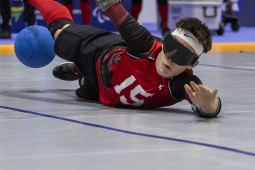
a young man, diving on the floor during a goalball game. Wearing a team Canada red and black jersey, a white headband, and black coloured blind fold. The ball is blue. / Un jeune homme plongeant au sol lors d'un match de goalball. Il porte un maillot rouge et noir de l'équipe du Canada, un bandeau blanc et un bandeau noir sur les yeux. Le ballon est bleu.
Goalball: A Life-Changing Sport Gateway for the Visually Impaired
[ Feature Article ] At fourteen, Harry Nickerson became the youngest-ever member of the Canadian Men's Goalball Team—not because the system found him, but because a chain of referrals happened to hold together. This article uses his journey to explore goalball's transformative potential for young people with vision loss and the role physical and health educators (PHE) can play in making sport access a reliable pathway rather than a fortunate accident.
Authored by: Harry Nickerson
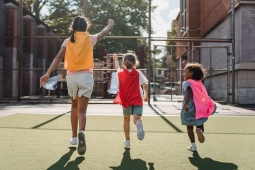
Three children in vibrant clothing joyfully running on a court, showcasing energy and playfulness. / Trois enfants en vêtements colorés courent joyeusement sur un terrain de jeu.
Walking is a Superpower!
[ Feature Article ] How can a simple walk be one of the most powerful choices we make? In this piece, eleven-year-old Ishaani Basu draws on research to explore how walking outside can improve physical and mental health, reduce harmful greenhouse gas emissions, and even free up government resources for people experiencing homelessness.
Authored by: Ishaani Basu
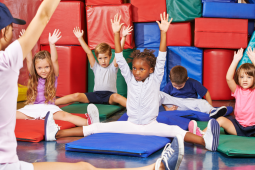
Children practicing various yoga poses in a gym class, demonstrating focus and balance. / Des enfants pratiquent des poses de yoga dans une salle de gym, concentrés et en harmonie avec leur environnement.
Who Plays, Who Doesn’t, and Why It Matters: The Case for Better Participation Data in Schools and Their Communities
[ Feature Article ] This article explores why high-quality, consistent, and useful sport and physical activity participation data matter for educators, schools, and communities. Although Canada has valuable national surveys and respected organizations that monitor participation, important gaps remain in understanding who participates, who does not, and where barriers to participation exist, particularly within school settings. Drawing on examples from Canada and abroad, the article examines how more coordinated and accessible participation data can support a range of actions that allow more children and youth to be active. It also highlights emerging initiatives that aim to provide decision-makers with more timely, integrated, and actionable sport and physical activity participation information.
Authored by: Jeffrey Gaudet, Dr. Sasha Gollish, Vanessa Coulbeck, Dr. Catherine Sabiston, Dr. Mathieu Bélanger
A group of children joyfully running down a brightly lit hallway, showcasing their excitement and energy. / Un groupe d'enfants court joyeusement dans un couloir, exprimant l'énergie et l'enthousiasme.
Active Bodies, Thriving Minds: Bridging the Physical Activity–Mental Health Gap in Schools
[ Feature Article ] How can we better connect the dots between movement and mindset in our schools? This article draws on research conducted in Ontario school boards and schools; however, the challenges and opportunities identified are relevant across Canada. While specific policies and programs may differ between provinces and territories, schools nationwide are grappling with many of the same questions around student mental health, physical activity, and how best to support young people to thrive amongst competing demands.
Authored by: Dr. Sasha Gollish, Sarah Ryan, Vanessa Coulbeck, Samira Sunderji, Dr. Catherine Sabiston
A group of people holding signs at a rally. One sign says "SAVE THE PLANET" with a blue drawing of the Earth. Another sign says "COOL KIDS SAVING HOT PLANET".
Examples of How a Comprehensive School Health Approach Can Be Used to Address Climate Change
[ Research ] Climate change represents a profound threat to the health and wellbeing of today's children and adolescents, yet its impacts on these populations are not fully understood. Evidence indicates that climate-related extreme events, and the stress associated with climate change, may significantly affect young people's mental health, educational attainment, and physical activity levels. Schools can play a pivotal role in addressing these challenges. One approach to addressing these challenges is using a Comprehensive School Health (CSH) model, which encompasses four pillars: teaching and learning, social and physical environment, healthy school policy, and partnerships and services. This paper presents illustrative ideas for programs, policies, or practices that could align with different pillars of the CSH model in relation to climate change. These examples are intended to prompt discussion and reflection, rather than to assert effectiveness, and may offer ways schools could consider supporting students in responding to climate-related concerns, including climate anxiety, and developing skills to navigate environmental challenges.
Authored by: Brenton Button, Will Burton, Gina Martin
Two children hold a red hoop between them with their hands, smiling.
Hula Hoops as Versatile Equipment for Target Games
[ Feature Article ] Hula hoops are incredibly versatile pieces of equipment. They can be used as stationary targets lying flat on the ground, rolling targets for chase or toss games, or even aerial targets when tossed into the air.
Authored by: Dr. John Byl