type

  • Feature Article
  • Podcast
  • Research

theme

  • Instant Activity
  • Food Literacy
  • Outdoor Learning
  • Physically Active Learning
  • Social Emotional Learning
  • Cross-Curricular Learning
  • Models-Based Approach
  • PHE Community
  • Healthy School Communities
  • Fundamental Movement Skills
  • Dance Education
  • Digital Literacy
  • Health Education
  • Financial Literacy
  • Physical Education
  • Sex Education
  • Educational Leadership
  • Equity, Diversity and Inclusion
  • Teacher Education
  • Mental Health
  • Substance Use
  • Truth & Reconciliation

Search Results

SORT BY:

Walking is a Superpower!
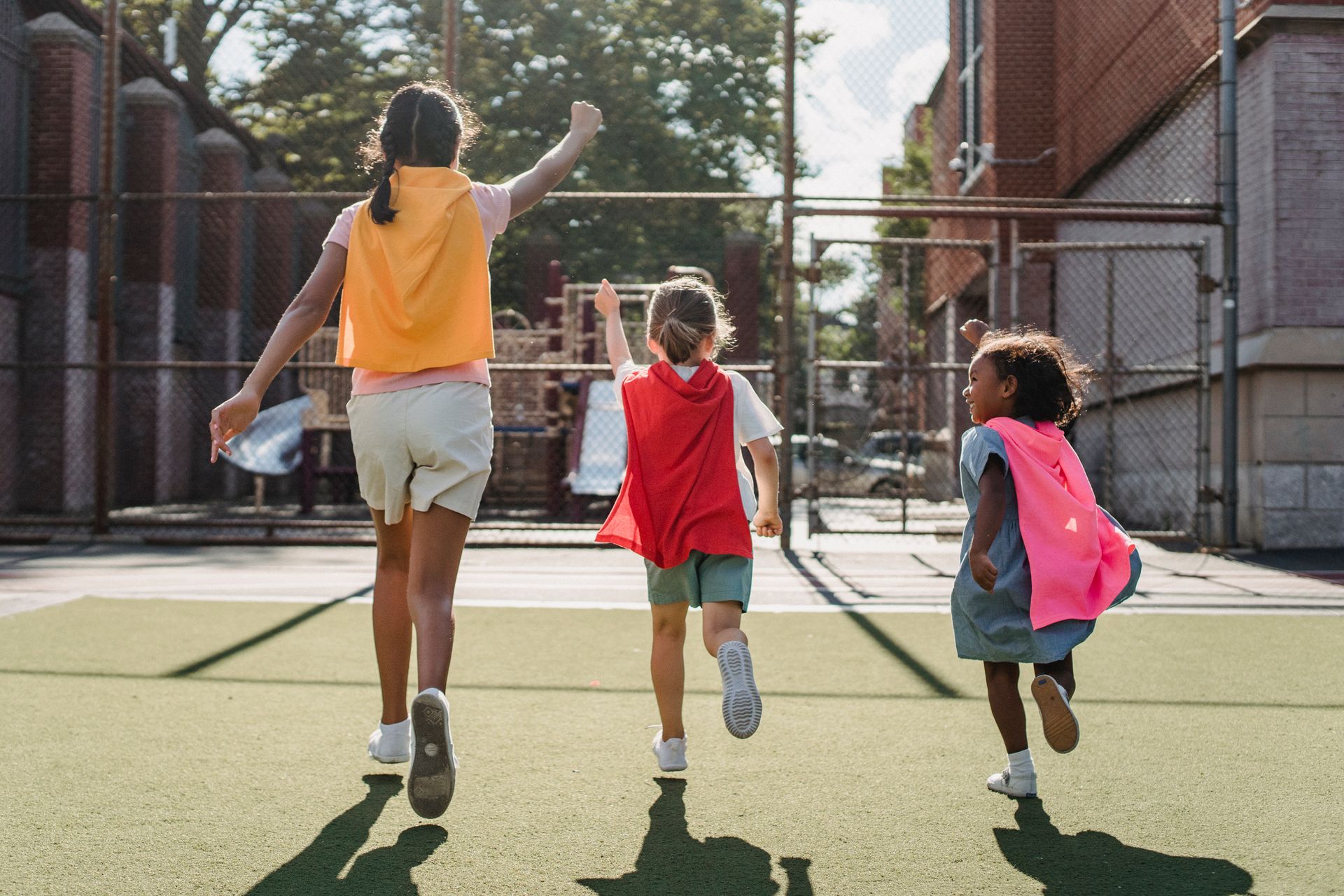
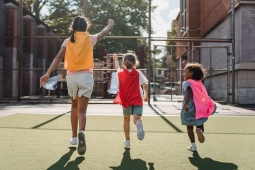
Three children in vibrant clothing joyfully running on a court, showcasing energy and playfulness. / Trois enfants en vêtements colorés courent joyeusement sur un terrain de jeu.

Walking is a superpower! One walk outside can change your health and the environment. Most people probably won’t believe me—but just keep on reading.

Hi, I’m Ishaani, and I am a kid living in downtown Toronto, Ontario. I am going to tell you about the effects of a simple walk outside and what you can do to help prevent more people in our world from secretly harming their own health and the environment. 

Listen to this: one walk outside can change your health. Researchers at Harvard Medical School found that one 15-minute walk outside can help you resist the urge to eat sugary snacks (https://www.health.harvard.edu/healthy-aging-and-longevity/5-surprising-benefits-of-walking). Eating too many unhealthy snacks can damage your gut and can even lead to severe diseases.

What about your mental health? 

Our brains are built to be outside in nature. They need to see green. Scientists have shown that being outside can support your health in many ways. Walking is a great way to be outside.

Walking outside not only helps you but also the environment and the unhoused. Many of you probably already know that cars emit a lot of gas, which is really bad for the environment, but have you ever considered how much gas cars actually release? The United Nations Economic Commission for Europe found that cars release up to 218 grams of gas per kilometer (https://publications.jrc.ec.europa.eu/repository/handle/JRC102610). Although 218 grams sounds small, it adds up quickly. Driving just 10 kilometers a day produces more than 2 kilograms of greenhouse gas emissions—over 700 kilograms in a year.

Walking doesn't harm the environment at all!

Does walking affect the people who are experiencing homelessness? 

If more people chose to walk, the government wouldn’t need to spend as much money on roads and could spend more money on housing people who are experiencing homelessness, which is way more important, right?

Kids’ health is in danger. A study in London found that kids growing up now have been developing smaller lungs due to the amount of harmful gases released from cars. Kids have a higher chance of asthma attacks and lifetime breathing issues (https://www.kcl.ac.uk/news/air-pollution-restricting-childrens-lung-development)! We have to do something. 

What can we do to try to help solve this problem?

People will still say that driving is way better, but you have heard a bunch of reasons why walking is much better than driving. You know how amazing walking is.

It’s really up to us to save our world. We can walk to the park now and then, or we can just spread the message to our own community by talking. So many people have this mindset that walking will make you late, but that is only true for people who live far away. Think about traffic, walking doesn't have traffic.

Most people probably didn't believe me when I gave the big idea that walking is a superpower, but now I hope you believe me.

Walking really is a superpower! One walk helps solve so many problems: environmental pollution, homelessness, and our own health.

Remember, whenever you go somewhere nearby, give walking a try. It's up to us to make a change in our world.  

-Ishaani Basu 


Recent Posts

Three children in vibrant clothing joyfully running on a court, showcasing energy and playfulness. / Trois enfants en vêtements colorés courent joyeusement sur un terrain de jeu.
Walking is a Superpower!
[ Feature Article ] How can a simple walk be one of the most powerful choices we make? In this piece, eleven-year-old Ishaani Basu draws on research to explore how walking outside can improve physical and mental health, reduce harmful greenhouse gas emissions, and even free up government resources for people experiencing homelessness.
Authored by: Ishaani Basu
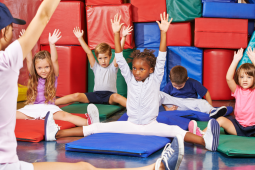
Children practicing various yoga poses in a gym class, demonstrating focus and balance. / Des enfants pratiquent des poses de yoga dans une salle de gym, concentrés et en harmonie avec leur environnement.
Who Plays, Who Doesn’t, and Why It Matters: The Case for Better Participation Data in Schools and Their Communities
[ Feature Article ] This article explores why high-quality, consistent, and useful sport and physical activity participation data matter for educators, schools, and communities. Although Canada has valuable national surveys and respected organizations that monitor participation, important gaps remain in understanding who participates, who does not, and where barriers to participation exist, particularly within school settings. Drawing on examples from Canada and abroad, the article examines how more coordinated and accessible participation data can support a range of actions that allow more children and youth to be active. It also highlights emerging initiatives that aim to provide decision-makers with more timely, integrated, and actionable sport and physical activity participation information.
Authored by: Jeffrey Gaudet, Dr. Sasha Gollish, Vanessa Coulbeck, Dr. Catherine Sabiston, Dr. Mathieu Bélanger
A group of children joyfully running down a brightly lit hallway, showcasing their excitement and energy. / Un groupe d'enfants court joyeusement dans un couloir, exprimant l'énergie et l'enthousiasme.
Active Bodies, Thriving Minds: Bridging the Physical Activity–Mental Health Gap in Schools
[ Feature Article ] How can we better connect the dots between movement and mindset in our schools? This article draws on research conducted in Ontario school boards and schools; however, the challenges and opportunities identified are relevant across Canada. While specific policies and programs may differ between provinces and territories, schools nationwide are grappling with many of the same questions around student mental health, physical activity, and how best to support young people to thrive amongst competing demands.
Authored by: Dr. Sasha Gollish, Sarah Ryan, Vanessa Coulbeck, Samira Sunderji, Dr. Catherine Sabiston
A group of people holding signs at a rally. One sign says "SAVE THE PLANET" with a blue drawing of the Earth. Another sign says "COOL KIDS SAVING HOT PLANET".
Examples of How a Comprehensive School Health Approach Can Be Used to Address Climate Change
[ Research ] Climate change represents a profound threat to the health and wellbeing of today's children and adolescents, yet its impacts on these populations are not fully understood. Evidence indicates that climate-related extreme events, and the stress associated with climate change, may significantly affect young people's mental health, educational attainment, and physical activity levels. Schools can play a pivotal role in addressing these challenges. One approach to addressing these challenges is using a Comprehensive School Health (CSH) model, which encompasses four pillars: teaching and learning, social and physical environment, healthy school policy, and partnerships and services. This paper presents illustrative ideas for programs, policies, or practices that could align with different pillars of the CSH model in relation to climate change. These examples are intended to prompt discussion and reflection, rather than to assert effectiveness, and may offer ways schools could consider supporting students in responding to climate-related concerns, including climate anxiety, and developing skills to navigate environmental challenges.
Authored by: Brenton Button, Will Burton, Gina Martin
Two children hold a red hoop between them with their hands, smiling.
Hula Hoops as Versatile Equipment for Target Games
[ Feature Article ] Hula hoops are incredibly versatile pieces of equipment. They can be used as stationary targets lying flat on the ground, rolling targets for chase or toss games, or even aerial targets when tossed into the air.
Authored by: Dr. John Byl
A young person in a red leotard smiles while holding up a hand and waving colorful ribbons against a white background.
Big Dreams, Small Budget: Getting Started with Circus Arts
[ Feature Article ] Circus Arts offers numerous benefits, including enhanced self-confidence, creativity, coordination, and resilience. It provides students with the opportunity to develop physical and artistic skills at their own pace, fostering an inclusive environment where everyone can succeed. The program can be started on a small budget using common gym equipment and station-based learning. With a limited amount of equipment, station-based learning keeps costs low while still offering a variety of options for students. This approach ensures that students can practice different skills in smaller groups, fostering focus and creativity without requiring a large investment in expensive Circus Arts equipment.
Authored by: Dani Thomson