5 Educator Tips and Resources to Help You Support Students with Diverse Abilities
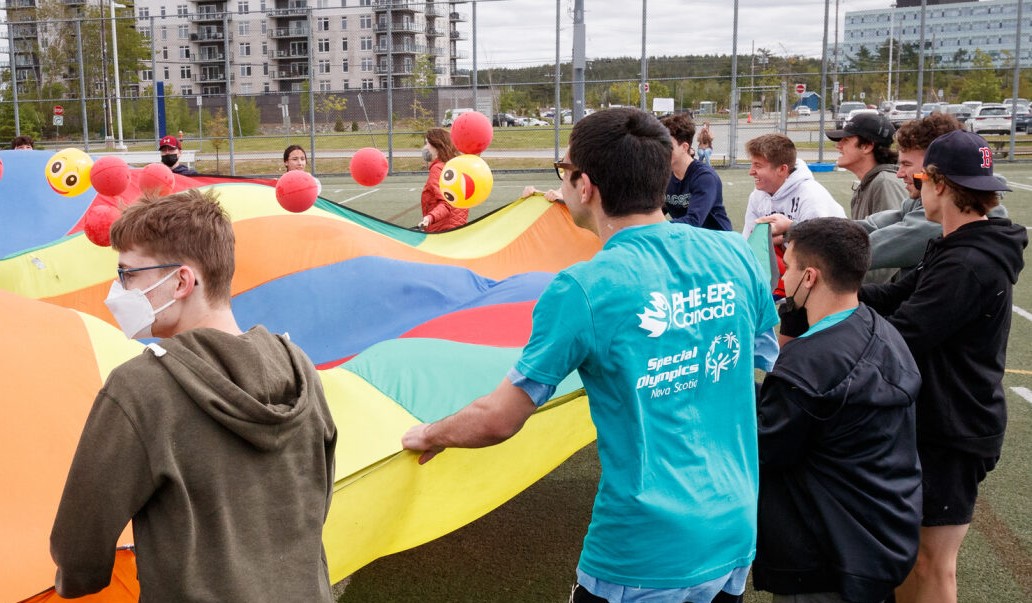
Every year, December 3rd is recognized as "International Day of Persons with Disabilities (IDPD): Removing Visible and Invisible Barriers". This day was proclaimed by the United Nations in 1992 was established to “promote an understanding of disability issues and mobilize support for the dignity, rights and well-being of persons with disabilities.” According to the Accessible Canada Act, disability is defined as “any impairment…or functional limitation…that, in interaction with a barrier, hinders a person’s full and equal participation in society”. When an individual interacts with their environment, this is when diverse abilities may be recognized, and barriers and limitations to participation can result in unequal opportunities to engage in physical activity.
Did you know that:
-
A disability can occur at any time in a person’s life; some people are born with a disability, while others develop a disability in their lifetime.
-
1 in 5 people in Canada (22%) have one or more disabilities.
-
In 2006, 96,060 youth aged 15 to 19 in Canada were living with a disability, which was 4.6% of the youth population (Government of Canada, 2022).
-
By 2017, the prevalence of disability in youth ages 15-24 years in Canada rose to 13% (Morris et al., 2018).
-
31% of Canadian first year university students report having a disability or impairment.
-
6.7% of Canadian university instructors and researchers report having a disability
With PHE Canada’s mission of ensuring all children live active, healthy lives, we implemented our Game Changers project to create inclusive school-based physical activity and leadership experiences for students of all abilities. PHE Canada’s Game Changers project utilizes a student-centered learning approach (as highlighted in our toolkit) to support students with diverse abilities in school communities to enhance the inclusivity and accessibility of everyday physical activity programming.
Through this pilot project it became evident that there was a need for removing barriers to participation for students of all abilities in school-based physical activity spaces. PHE Canada has created the Inclusion of Students of All Abilities in School-Based Physical Activity Experiences: Guidebook and Poster which aim to empower educators to:
-
Increase the participation, motivation, and confidence of students of all abilities in school-based sport and physical activities by reducing and/or eliminate barriers to participation
-
Support youth of all abilities in becoming physical activity leaders in their own schools by provide students with leadership training tools
-
Utilize the resources to spark positive change and educate staff and students of all abilities about the importance of fostering positive, safe, and inclusive spaces for physical activity.
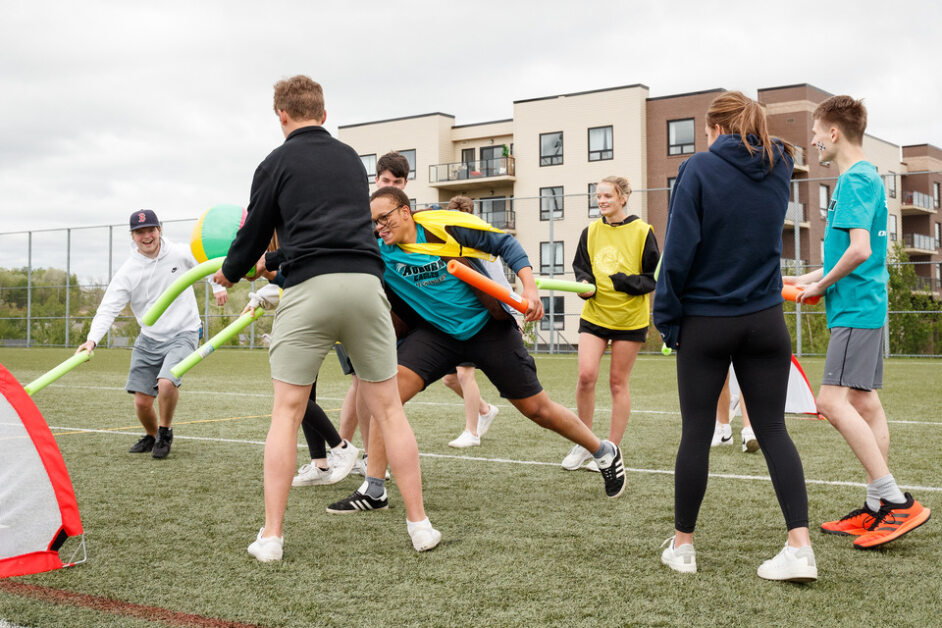
When working to support students of all abilities in school-based sport and physical activity settings, we recommend incorporating these 5 educator tips into your programming:
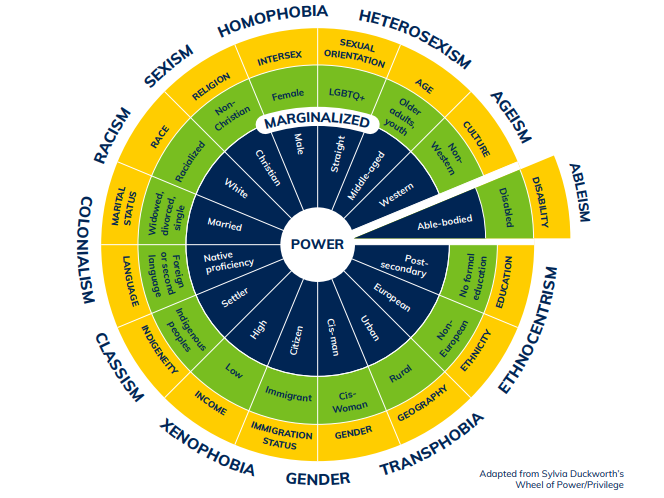
- Use an intersectional approach when working with students of all abilities. Every individual is multidimensional and has various identities that make up who they are. These identities influence an individual’s position of power and privilege in their community and can act as either a barrier or facilitator to participation.
- Acknowledge that there are many types of diverse abilities, and each student will have a unique level of support needs. As an educator, work to get to know your students and the diverse abilities that they have. Don’t be afraid to ask questions - get to know your students by asking them about what they find challenging, fun, and the level of support in which they require.
- Use appropriate, person-first language. Make sure you’re using appropriate language when speaking to, and speaking about, a person and their diverse needs. Learn from the individuals themselves, or from their communities, about the most appropriate language to use.
- Create inclusive physical activity experiences. Embedding inclusive practices in all of your physical activity experiences by using the STEP Framework (adapting the Space, Task, Equipment, and People). Be proactive in using inclusive practices instead of being reactive and having to make modifications to facilitate inclusion.
- Use a student-centered approach to creating and implementing physical activity experiences. Youth are knowledge holders, and by providing them with increased autonomy through leadership opportunities, students can engage in decision-making processes and share their opinions related to programming, with the hope of increasing their motivation to participate (Edwards et al., 2021).

In addition to a deeper dive into the preceding tips, you can learn more about ways in which you, as educators, can work to reduce and eliminate interpersonal, intrapersonal, structural, and socio-cultural barriers to participation in school-based physical activity for students of all abilities. Access the free Inclusion of Students of All Abilities in School-Based Physical Activity Experiences Guidebook and Poster.
|
|
|
| Download Guidebook | Download Poster |


To expand your learning on "International Day of Persons with Disabilities", you can find more information about inclusion and physical activity programming, by checking out the following organizations and resources:
References:
Accessibility at Waterloo: International Day of Persons with a Disability (IDPD). Retrieved from: https://uwaterloo.ca/accessibility/international-day-persons-disabilities-idpd-0
Edwards, B. M., Cameron, D., King, G., & McPherson, A. C. (2021). Contextual strategies to support social inclusion for children with and without disabilities in recreation. Disability and Rehabilitation, 43(11), 1615–1625. https://doi.org/10.1080/09638288.2019.1668972
Morris, S., Fawcett, G., Brisebois, L., & Hughes, J. (2018, November 28). Canadian Survey on Disability Reports. https://www150.statcan.gc.ca/n1/pub/89-654-x/89-654-x2018002-eng.htm
United Nations (2021). International Day of Persons with Disabilities (IDPD). Retrieved from: https://www.un.org/development/desa/disabilities/international-day-of-persons-with-disabilities-3-december/2021-2.html
Authors