
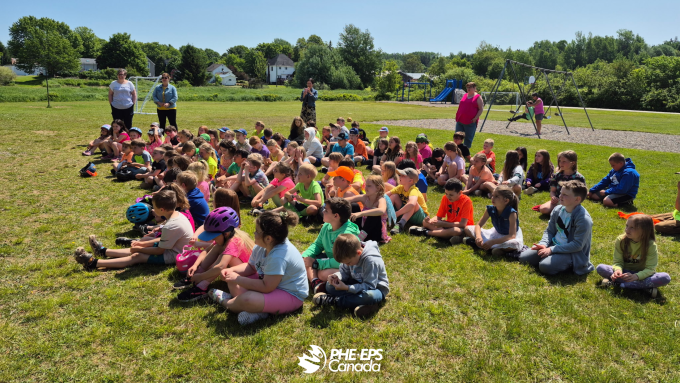
PHE Canada closed out another school year with a footprint that is easy to state and hard to picture: millions of students touched, tens of thousands of educators supported, thousands of schools and communities involved. The 2025–2026 cycle brought new territory for long-running programs, fresh resources built from scratch, and a batch of stories worth telling.
Numbers alone undersell it. Each program that ran last year translated, somewhere, into a specific kid who found their footing in a gym class, a specific teacher who finally had the right tool in hand, a specific school that decided to keep something going on its own. What follows is a partial account: a sampling of what was delivered, who it reached, and what the people on the receiving end had to say about it.
Game Changers goes younger, and starts spreading on its own
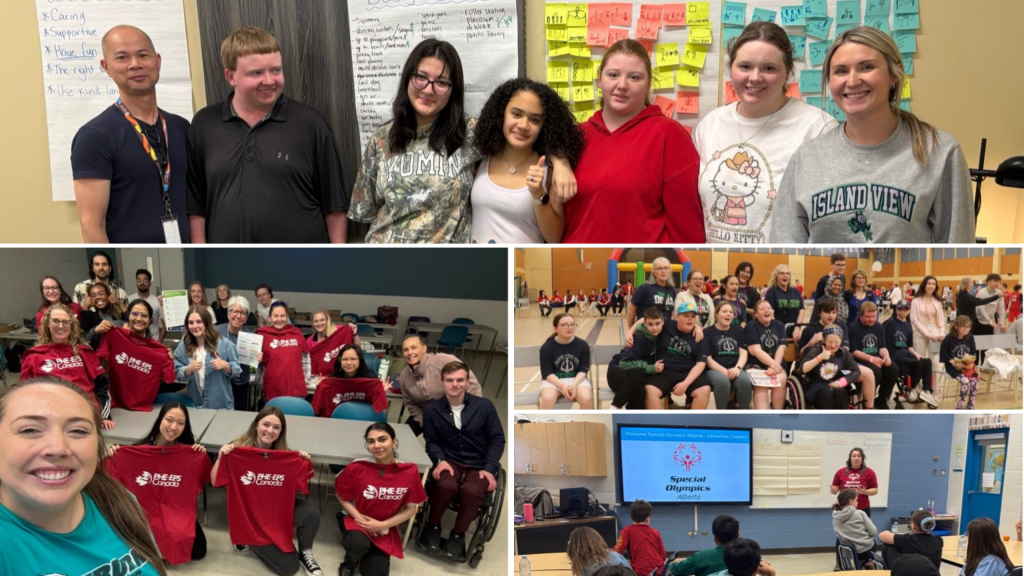
Game Changers had its widest year yet. The program crossed into elementary schools for the first time, and the results settled an open question quickly: younger students turn out to be entirely capable of co-designing inclusive physical activity programming for themselves, and hungry for the supports that come with it.
Facilitator training ran from coast to coast to coast, adding new leaders to the roster. Meanwhile, veteran schools moved into a second phase, running the program without hands-on support and, in some cases, folding it permanently into Leadership class as standard curriculum rather than an add-on. In one case, a school stood up its own version of Game Changers from scratch, having simply watched what neighbouring schools were doing. Organic replication like that is the outcome the program was designed to produce.
"Before Game Changers, I didn't have much interest in sports and when I was at my soccer practices I wasn't as good as the others, but ever since Game Changers I've boosted my energy and stamina."
— Grade 5 student, Game Changers participant
"100% eliminate barriers. Students feel part of something special."
— Teacher Champion running Game Changers at their school
Learn more about Game Changers
STOMP hands the microphone to students
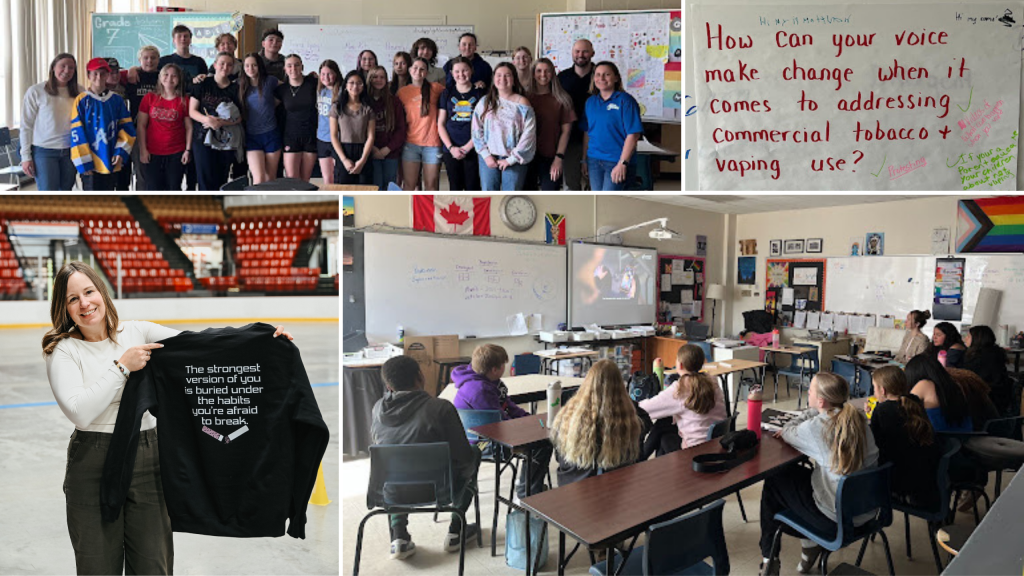
Student TOgether Moving to Prevent Substance Use (STOMP) spent the year outgrowing the classroom. Student Action Teams built prevention initiatives of their own design, ran presentations for their peers, and carried cannabis and substance use education into the hallways themselves.
On the educator side, a new suite of curriculum-aligned activities filled a practical gap, giving teachers ready material to work from. On the student side, teams were given room to reshape the approach around the realities of their own school. That latitude, with young people framing prevention in their own language and aiming it at people they actually know, became the part of the program with the most traction.
"They are diving in! To the point where I can't find enough minutes to support them!"
— Teacher implementing STOMP in their school
"The earlier STOMP information is shared, the better."
— Educator supporting STOMP in their community
At My Best closes in on a million students
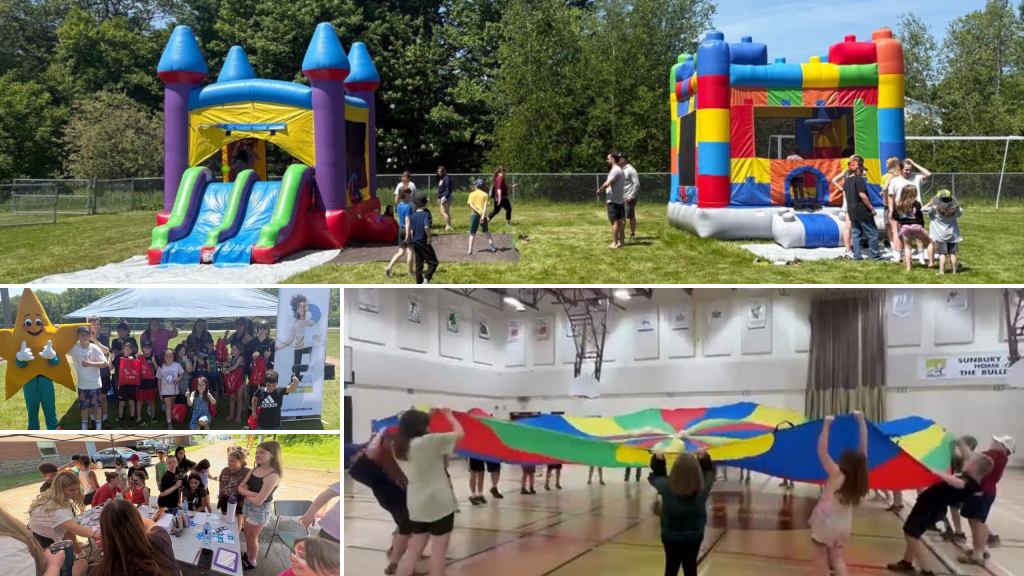
At My Best is approaching a milestone of one million students supported, and it did not spend the year coasting toward it. New curriculum-aligned activities were built for kindergarten through Grade 8, embedding decision-making skills and protective factors into the lessons themselves rather than bolting them on.
The bigger addition was a Leadership Development Program aimed at middle school students, equipping them to act as mentors and to co-design Play Days for younger peers. The cross-grade dynamic it created, with older students in charge and younger ones watching closely, became the year's standout feature.
"The lesson plans were outstanding, the students were engaged, and most importantly, they learned valuable life skills while having fun. This program is a fantastic example of how physical and health education can support the whole child."
— Teacher Champion running At My Best in their classroom
"I observed a lot of really positive interactions between the middle school and elementary students. The younger students looked up to them, and the middle school students were encouraging, patient, and supportive. It was a great opportunity for them, and I think it's something worth continuing in the future."
— Teacher Champion leading At My Best Play Days
PHE Empowerment Grants: money where the gap is
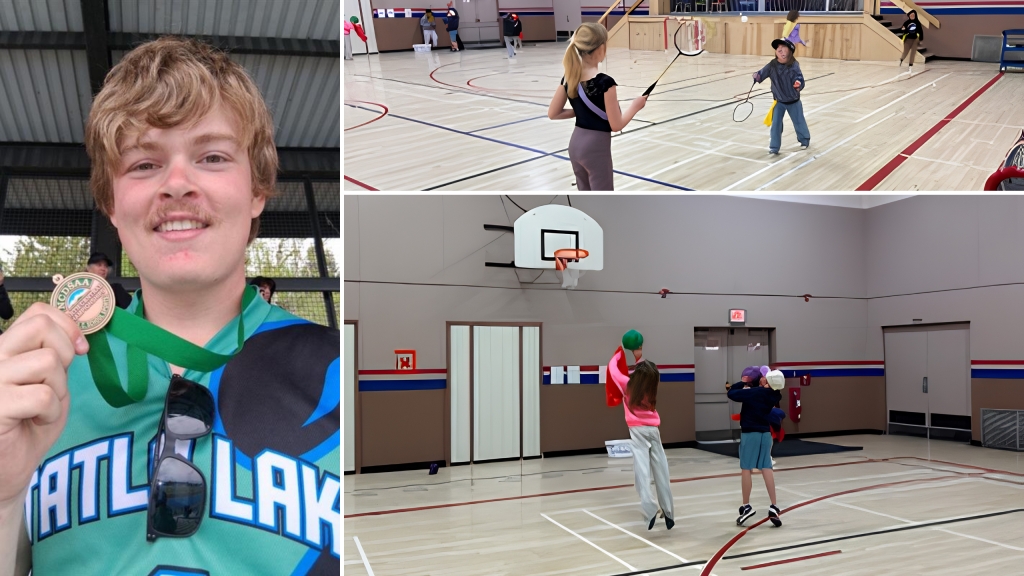
PHE Canada's funding program landed in classrooms across a wide geographic spread last year, including Whitehorse and Gatineau, Tatla Lake and Amherst.
The Gopher Physical Activity Equipment Grant closed a basic supply problem. Schools that had been short on the gear needed to get students moving received it, and put it into rotation right away. The Margaret Eaton School Legacy Fund supported something quite different: a graduate student training to become a PHE teacher, who used the bursary to travel, conduct research, and assemble a Nature-Based Literacy Kit. She now draws on it daily in her own school and shares it with pre-service teachers at the university level.
Two grants with almost nothing in common structurally, built on a single premise: hand people the resources and let them do the work.
"Many of our students lack access to sporting equipment at home. This new equipment has made different physical activities accessible for all by allowing a ball to be in the hands of any kid at every moment. Now, all can feel equal on the field and in the gym, always."
— Teacher, Jack Hulland Elementary School, Whitehorse (Yukon)
"The bursary allowed me to return for a celebration visit where the research team, teachers, students, and I could reflect on and celebrate the work we had accomplished together throughout the school year. It was a joyful day that reinforced the importance of relationship-building and reciprocity in community-engaged research."
— Margaret Eaton Bursary Recipient, Master's student in PHE
Explore PHE Canada's funding opportunities
What 2026–2027 opens up
September is close, and with it another round of chances to collaborate, shift something for the better, and generate the next set of stories.
PHE Canada is asking educators to reach out early, whether the priority this year is building student leadership, confronting substance use directly, strengthening programming so it works for every student, or securing the funding and resources a school needs to advance health and well-being. The team is available to talk through what support would actually look like for a given school, district, or group of students.
Thanks to everyone who was part of it. On to another year of impact.