The Well-Being Gap - Highlighting challenges and supports for gender-diverse youth health in BC
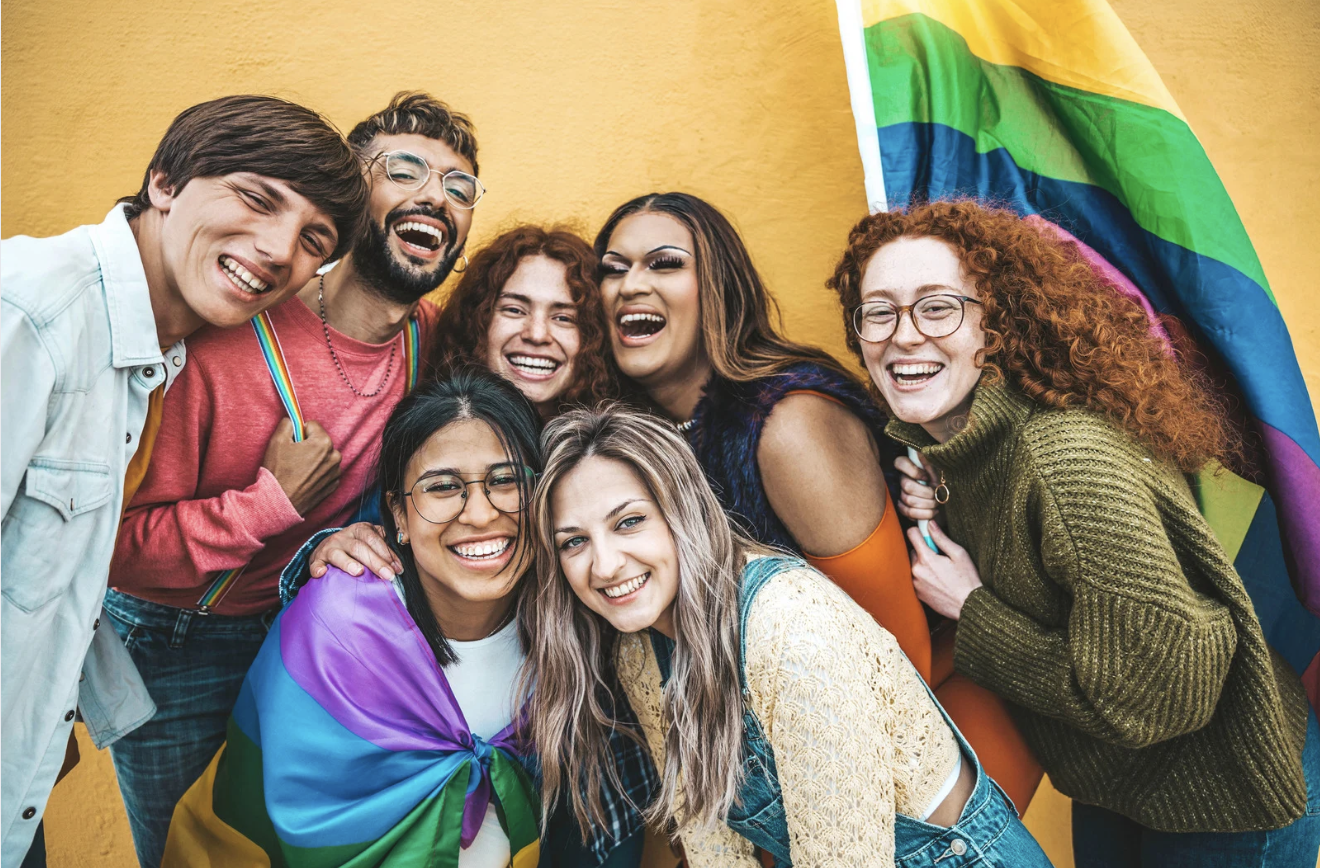
In response to the surge in anti-transgender policies across the border and within our own Canadian classrooms, PHE Canada is focusing attention on current developments within our own communities, aiming to champion the rights of gender-diverse youth and areas for attention.
The Well-Being Gap: Highlighting challenges and supports for gender-diverse youth health in BC, 2018-2023 provides an in depth look into the health of nearly 500 transgender and over 1000 nonbinary and questioning youth in British Columbia (BC). The report is a collaboration between researchers at SARAVYC (Stigma and Resilience Among Vulnerable Youth Centre) and the McCreary Centre Society and uses data from the 2018 and 2023 BC Adolescent Health Survey (BC AHS). This survey is one of the most reliable, comprehensive health surveys of adolescents ages 12–19 in public schools in BC. Repeated every five years since 1992, the survey involves a large-scale population-based sample.
Key Gender Terms:
Here are some key terms as defined by the research team to understand.
- Cisgender - Those whose sex assigned at birth and current gender identity match
- Trans girl - Those whose sex assigned at birth was male and now identify as a girl
- Trans boy - Those whose sex assigned at birth was female and now identify as a boy
- Nonbinary – Those who chose neither boy nor girl
- Questioning – Those who were unsure of their current gender
The latest Well-Being Gap report covers a wide range of health topics, including physical health, substance use, and family dynamics. However, PHE Canada has chosen to highlight three key takeaways that stand out from the findings. These insights offer a deeper understanding of the challenges youth face today and what they need to thrive.
Takeaway #1: Gender Diverse Youth Experience High Rates of Discrimination
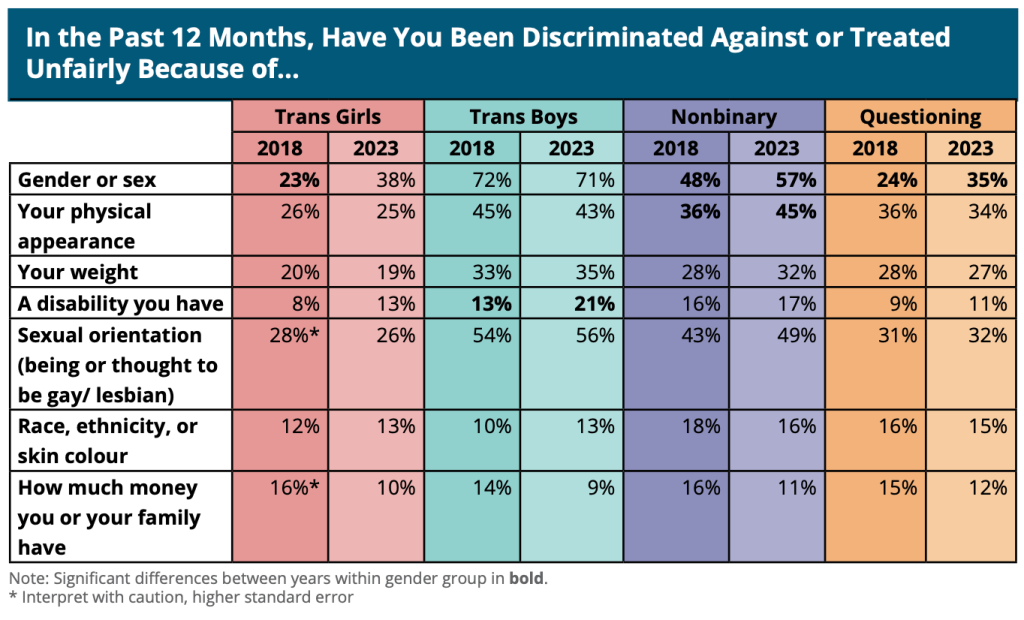
In 2023, trans boys and nonbinary youth faced the highest rates of discrimination (Table 1). Trans boys were most likely to experience discrimination based on their gender/sex and sexual orientation. Trans boys and nonbinary youth, followed by questioning youth, were most likely to be discriminated against based on their physical appearance. A 14 year-old trans boy was quoted stating:
“The harassment I face when I go out in public with friends, family, and even just myself, is excruciating and I wish there was more that could be done about it. It feels like nobody in this community listens… Every single one of my friends do not feel safe at school or in our town in general. I wish something more could happen here.”
All groups, with the exception of trans boys, experienced higher rates of discrimination based on gender and sex in 2023 compared to 2018. Trans boys experienced similar rates of this discrimination in both years (72% and 71%).
Table 1. Discrimination in the last 12 months. Taken from the BC Adolescent Health Survey, reported in The Well-Being Gap report (2024).
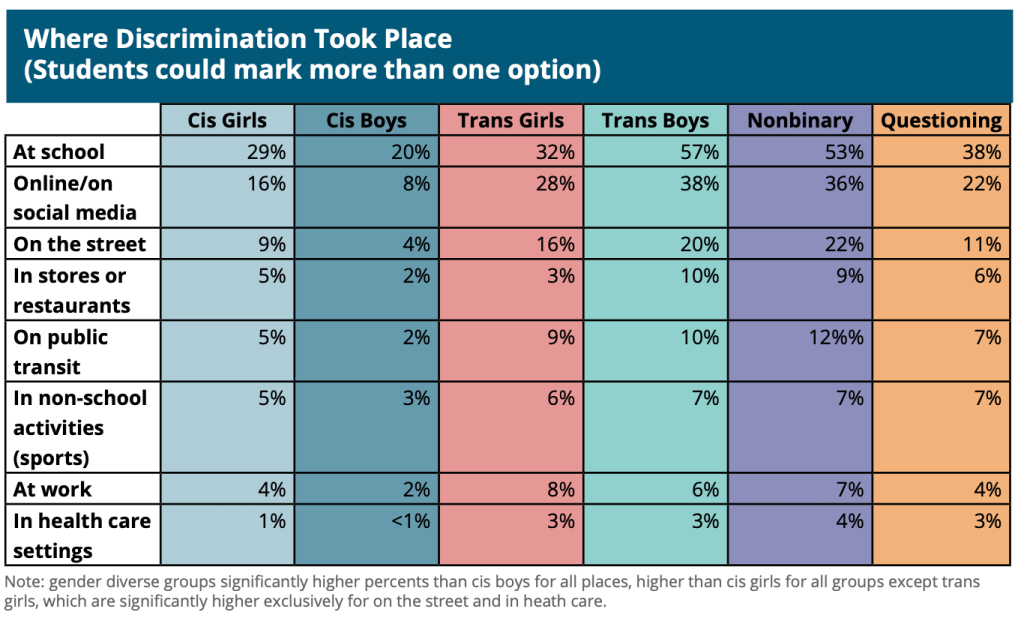
The most common place where discrimination occurred was school, followed by social media and other virtual spaces (Table 2). Gender diverse youth experienced discrimination at consistently higher rates than cisgender youth in all spaces.
Table 2. Where discrimination took place. Taken from the BC Adolescent Health Survey, reported in The Well-Being Gap report (2024).
Takeaway #2: Youth Want to Learn More About Mental Health at School
One powerful quote from a questioning 14-year-old in the report says,
“I feel that depression should be spoken more about, specifically how to help people going through it.”
This sentiment is not new, as Jack (Grade 12) shared similar thoughts about the Canadian PHE Competencies stating, “the Canadian PHE Competencies will help shed a light on topics that young people think about but rarely talk about in schools. This is especially true for outcomes related to creating meaningful relationships with themselves and others. It is vital for us to learn to respect and appreciate ourselves in order to live well” (Davis et al., 2023).
There is a strong desire among students to engage in open conversations about mental health. Clearly, they are not afraid to tackle tough topics, and it is time schools take note. Mental health should not be a “one-and-done” topic. It can be woven throughout the curriculum. For example, relating mental health to PHE, if an athlete in the media shares that they have been experiencing poor mental health, teachers can use this person a role model and address it directly in class, pointing out resources available to students and encouraging open discussions on how to reach out for support when needed.
This is especially important for the 2SLGBTQ+ community as gender minority youth were significantly less likely to have good or excellent mental health compared to cisgender youth (Figure 1). All groups’ mental health declined from 2018 to 2023. In alignment with 2018 findings, more than 25% of gender-diverse participants experienced extreme stress in the last 30 days—far higher than the 6% and 17% seen in cisgender boys and girls, respectively. The study also revealed that self-harm rates were alarmingly high among trans boys, nonbinary, and questioning students, with over half reporting that they had self-injured in the past year. Self-harm rates significantly increased from 2018 to 2023.
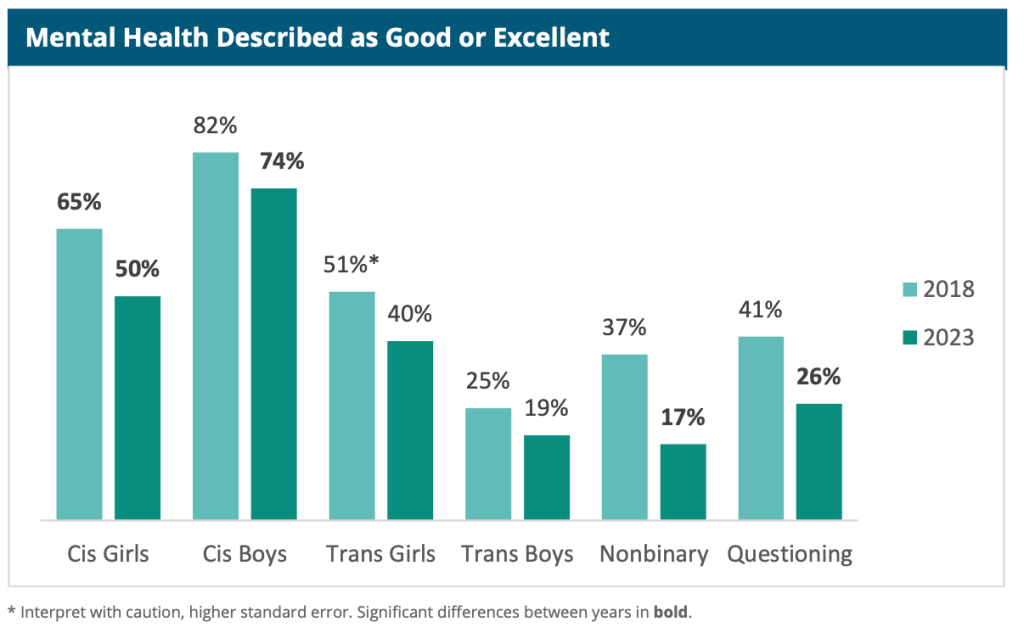
Figure 1. Mental health described as good or excellent. Taken from the BC Adolescent Health Survey, reported in The Well-Being Gap report (2024).
If students feel uncomfortable speaking to a teacher about their struggles, it is crucial that they know where to turn for help. However, due to a lack of dedicated teaching time on health and wellness in generalist teacher training, many feel underprepared to both teach about mental health and support students with mental health struggles. Students desire consistent access to relevant information throughout their education (Davis et al., 2023). Resources for the 2SLGBTQ+ community are conveniently listed at the bottom of this article.
Takeaway #3: Students Want Sexual Health Education That is Relevant to Their Sexual Orientation and Gender Identity
While most students reported receiving sexual health education at school, many felt it started at the wrong age. In particular, gender-diverse students found that the curriculum did not address their needs. Around 50% of trans and nonbinary youth, as well as 31% of questioning youth, said their sexual health education was not relevant to their gender identity. Similarly, around half of all gender-diverse youth reported that their education did not consider their sexual orientation. Disability was entwined in sex education as well, as gender-diverse youth did not feel that their education was relevant for their disability and health condition.
Sexual health education is crucial for students as they navigate their personal growth and relationships. However, for it to be effective, it must be inclusive and relevant to all students. Comprehensive sex education—not one-size-fits-all lessons—ensures that every student receives the knowledge and support they need to stay healthy and safe.
To help educators (both in- and pre-service) and students, PHE Canada will be releasing an online course on comprehensive sex education in 2025.
Conclusion:
By addressing these key areas— discrimination, mental health, and sexual health education—schools can create more supportive, inclusive environments for all students. With the right resources and approaches, we can help ensure that every student has the tools they need to succeed and feel safe in their learning environment. Read the full report to see the in-depth profile of students in BC.
Resources:
Mental health supports
- Kids Help Phone - Offers 24/7 support, including professional counselling, information and referrals, and volunteer-led, text-based support to young people in both English and French.
- Website: https://kidshelpphone.ca/
- Hotline: 1-800-668-6868
- Text: 686868
- PFLAG - 24/7 support. Provides support, information and resources to gay, lesbian, bisexual, transgender or questioning people, as well as to their families and friends.
- Website: https://pflagcanada.ca/
- Call toll-free: 1-888-530-6777
- Email: [email protected]
- Trans Lifeline - This line is primarily for transgender people experiencing a crisis. This includes people who may be struggling with their gender identity and are not sure that they are transgender. While our goal is to prevent self-harm, we welcome the call of any transgender person in need. We will do our very best to connect them with services that can help them meet that need.
- Website: https://translifeline.org/
- In Canada Call: (877) 330-6366
- In USA Call: (877) 565-8860
References
Davis, M., Gleddie, D. L., Nylen, J., Leidl, R., Toulouse, P., Baker, K., & Gillies, L. (2023). Canadian physical and health education competencies. Physical and Health Education Canada.
Authors