type

  • Feature Article
  • Podcast
  • Research

theme

  • Instant Activity
  • Food Literacy
  • Outdoor Learning
  • Physically Active Learning
  • Social Emotional Learning
  • Cross-Curricular Learning
  • Models-Based Approach
  • PHE Community
  • Healthy School Communities
  • Fundamental Movement Skills
  • Dance Education
  • Digital Literacy
  • Health Education
  • Financial Literacy
  • Physical Education
  • Sex Education
  • Educational Leadership
  • Equity, Diversity and Inclusion
  • Teacher Education
  • Mental Health
  • Substance Use
  • Truth & Reconciliation

Search Results

SORT BY:

Get your Students Moving and Grooving

many children dancing in a ballet studio with the instructor in the back of the class.

Previously published in Volume 86, Issue 2

It is the start of another school year, and this year will be like no other. As we all navigate these unfamiliar circumstances, Canada's National Ballet School (NBS) wants to share the power of dance and help you find creative ways to keep your students moving. 

Why dance?

Dance is a powerful yet underutilized tool for health and well-being across all spectrums of Canadian society. Creative movement has the unique ability to connect people and provide comfort during challenging times. For kids, creative movement supports the development of the whole child, fostering expression, collaboration and creativity while developing fundamental aspects of physical literacy. 

Ongoing involvement in dance can also:

  • Foster a love of movement and desire to be physically active for life
  • Increase social and communications skills
  • Strengthen bonds with peers
  • Improve self-esteem and self-confidence
  • Encourage young people to work from their own experiences and abilities, communicating thoughts, emotions and ideas through movement 

Creative movement is a flexible tool for your classroom; it can be designed to complement curriculum plans, space restrictions, learning abilities, physical and cognitive abilities, cultural and language contexts, and more. 

“Art has an amazing ability to help heal, to connect, and I think during COVID-19 my students need an outlet. To see dance resources that give a sense of normalcy is amazing. To keep them motivated, to keep them excited about something new and to keep them inspired that there are beautiful things out there has been really helpful.” 
                       – Shannon, elementary school teacher in Saskatchewan

Bringing dance online!
In this new school year, technology is an important tool for engaging students in the classroom or from home. Canada’s National Ballet School offers a suite of free online creative movement resources to help educators keep kids moving all year long. No dance experience is necessary to facilitate NBS’ Kids programs! 

NBS’ online resources include videos, lesson plans, sample rubrics, and additional course content developed by world-renowned dance experts and teachers. Access cross-curricular units that connect creative movement to science, geography and social studies; explore the activity library; learn about powwow and hip-hop from artist Angela Gladue; or experience the magic of ballet and learn about its evolution. Below you will find highlights from NBS’ resources for kids and the many ways you can engage students in the physical, social and emotional benefits of dance!

3 ways to get your students dancing!

  1. Access bilingual cross-curricular learning units that use dance to explore subject areas like science, geography and language arts!

Each unit includes a series of printable lesson plans paired with demonstration videos and downloadable music. Lessons will take students through the creative process as they learn about maps, energy, poetry and more.

          2.    Dance with Angela Gladue!

Get in the groove and join artist Angela Gladue for a study of powwow and hip-hop dance. Angela will guide you through three units: hip-hop basics, powwow basics and an original choreography that combines the two styles. Kids can follow along with these step-by-step instructional videos in the classroom, or from home.

          3.    Explore the world of ballet!

Whether you are a ballet connoisseur or watching a performance for the first time, NBS invites you to Fall in Love with the Ballet. This recently launched free online resource features performances and supporting materials curated and created to provide a glimpse, through the lens of young artists, into the world of ballet. Watch full performances by NBS students and access teaching guides for grades 4-12 with curriculum connections to the arts, writing, media literacy, and social studies. 

PLUS: Explore the Activity Library, learn a special choreography by Jera Wolfe, learn about teaching creative movement to kids, and more!

Visit https://www.nbs-enb.ca/resources/educators/ to learn more about NBS’ online dance resources for kids!

(Photos courtesy of Canada’s National Ballet School)

Recent Posts

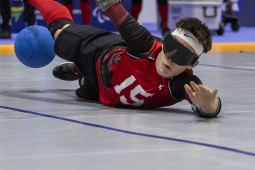
a young man, diving on the floor during a goalball game. Wearing a team Canada red and black jersey, a white headband, and black coloured blind fold. The ball is blue. / Un jeune homme plongeant au sol lors d'un match de goalball. Il porte un maillot rouge et noir de l'équipe du Canada, un bandeau blanc et un bandeau noir sur les yeux. Le ballon est bleu.
Goalball: A Life-Changing Sport Gateway for the Visually Impaired
[ Feature Article ] At fourteen, Harry Nickerson became the youngest-ever member of the Canadian Men's Goalball Team—not because the system found him, but because a chain of referrals happened to hold together. This article uses his journey to explore goalball's transformative potential for young people with vision loss and the role physical and health educators (PHE) can play in making sport access a reliable pathway rather than a fortunate accident.
Authored by: Harry Nickerson
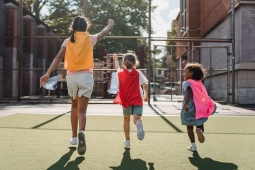
Three children in vibrant clothing joyfully running on a court, showcasing energy and playfulness. / Trois enfants en vêtements colorés courent joyeusement sur un terrain de jeu.
Walking is a Superpower!
[ Feature Article ] How can a simple walk be one of the most powerful choices we make? In this piece, eleven-year-old Ishaani Basu draws on research to explore how walking outside can improve physical and mental health, reduce harmful greenhouse gas emissions, and even free up government resources for people experiencing homelessness.
Authored by: Ishaani Basu
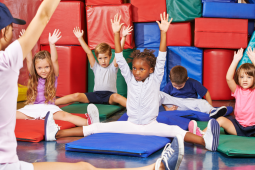
Children practicing various yoga poses in a gym class, demonstrating focus and balance. / Des enfants pratiquent des poses de yoga dans une salle de gym, concentrés et en harmonie avec leur environnement.
Who Plays, Who Doesn’t, and Why It Matters: The Case for Better Participation Data in Schools and Their Communities
[ Feature Article ] This article explores why high-quality, consistent, and useful sport and physical activity participation data matter for educators, schools, and communities. Although Canada has valuable national surveys and respected organizations that monitor participation, important gaps remain in understanding who participates, who does not, and where barriers to participation exist, particularly within school settings. Drawing on examples from Canada and abroad, the article examines how more coordinated and accessible participation data can support a range of actions that allow more children and youth to be active. It also highlights emerging initiatives that aim to provide decision-makers with more timely, integrated, and actionable sport and physical activity participation information.
Authored by: Jeffrey Gaudet, Dr. Sasha Gollish, Vanessa Coulbeck, Dr. Catherine Sabiston, Dr. Mathieu Bélanger
A group of children joyfully running down a brightly lit hallway, showcasing their excitement and energy. / Un groupe d'enfants court joyeusement dans un couloir, exprimant l'énergie et l'enthousiasme.
Active Bodies, Thriving Minds: Bridging the Physical Activity–Mental Health Gap in Schools
[ Feature Article ] How can we better connect the dots between movement and mindset in our schools? This article draws on research conducted in Ontario school boards and schools; however, the challenges and opportunities identified are relevant across Canada. While specific policies and programs may differ between provinces and territories, schools nationwide are grappling with many of the same questions around student mental health, physical activity, and how best to support young people to thrive amongst competing demands.
Authored by: Dr. Sasha Gollish, Sarah Ryan, Vanessa Coulbeck, Samira Sunderji, Dr. Catherine Sabiston
A group of people holding signs at a rally. One sign says "SAVE THE PLANET" with a blue drawing of the Earth. Another sign says "COOL KIDS SAVING HOT PLANET".
Examples of How a Comprehensive School Health Approach Can Be Used to Address Climate Change
[ Research ] Climate change represents a profound threat to the health and wellbeing of today's children and adolescents, yet its impacts on these populations are not fully understood. Evidence indicates that climate-related extreme events, and the stress associated with climate change, may significantly affect young people's mental health, educational attainment, and physical activity levels. Schools can play a pivotal role in addressing these challenges. One approach to addressing these challenges is using a Comprehensive School Health (CSH) model, which encompasses four pillars: teaching and learning, social and physical environment, healthy school policy, and partnerships and services. This paper presents illustrative ideas for programs, policies, or practices that could align with different pillars of the CSH model in relation to climate change. These examples are intended to prompt discussion and reflection, rather than to assert effectiveness, and may offer ways schools could consider supporting students in responding to climate-related concerns, including climate anxiety, and developing skills to navigate environmental challenges.
Authored by: Brenton Button, Will Burton, Gina Martin
Two children hold a red hoop between them with their hands, smiling.
Hula Hoops as Versatile Equipment for Target Games
[ Feature Article ] Hula hoops are incredibly versatile pieces of equipment. They can be used as stationary targets lying flat on the ground, rolling targets for chase or toss games, or even aerial targets when tossed into the air.
Authored by: Dr. John Byl